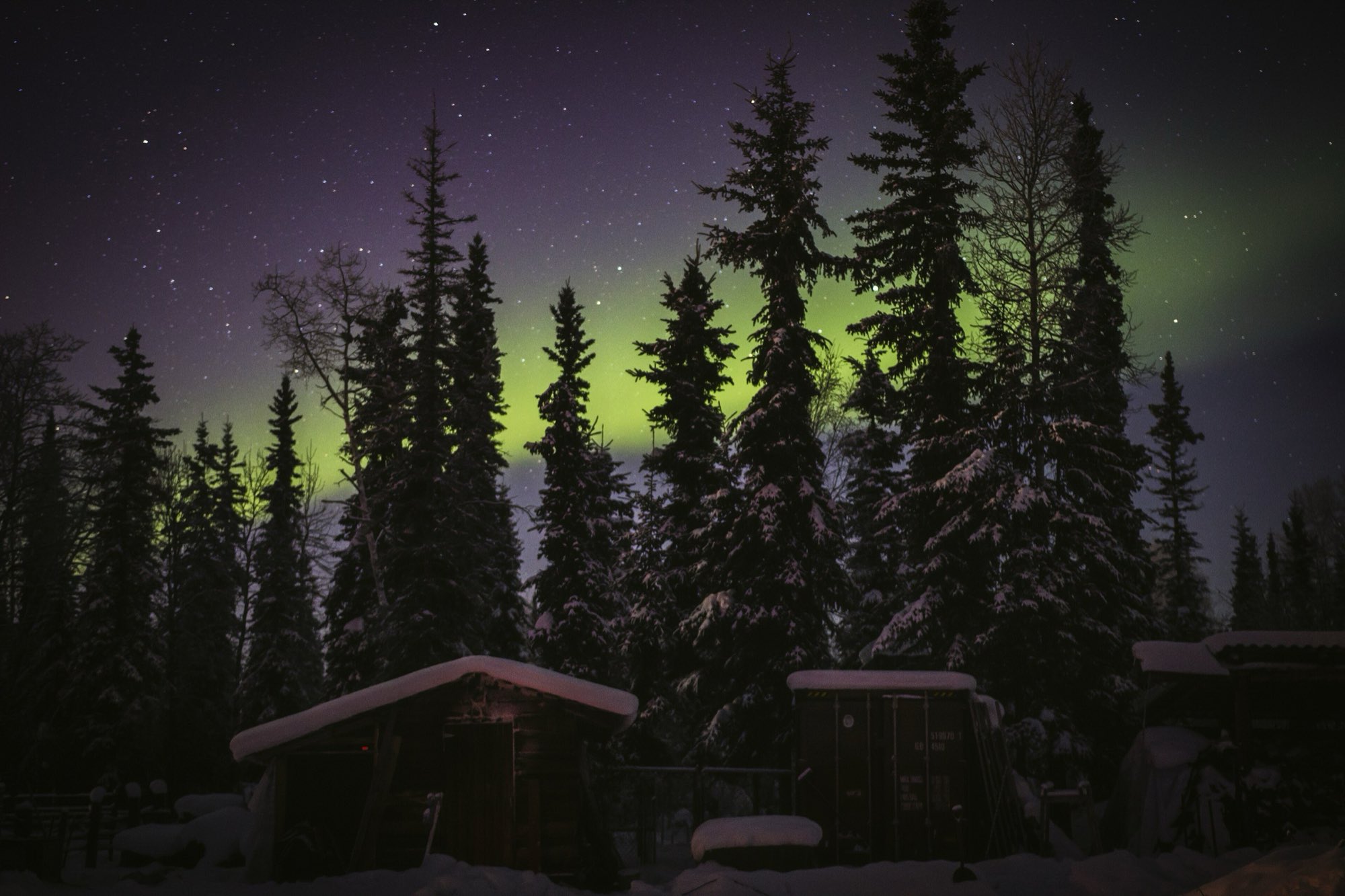

Late February to March.
That's when Fairbanks has its clearest nights of the season. Nearly half of nights have a clear spell, against about a quarter in September and October. Clear sky, not the aurora itself, is what usually decides whether you see it.
Chance of a proper display with a 3-night stay in Fairbanks
Share of all real 3-night stretches, 2000–2026, with at least one clear, active night. Tap, hover or tab onto a month for detail.
clear on 26% of nights
clear on 27% of nights
clear on 35% of nights
clear on 37% of nights
clear on 44% of nights
clear on 45% of nights
clear on 49% of nights
clear on 40% of nights
Month by month
"Clear night" means at least one hour between 9pm and 3am with at most a few clouds (no more than two-eighths of the sky) at Fairbanks airport. A "proper display" means that clear hour came with moderate geomagnetic activity (Kp 2 or higher), enough for a visible arc rather than a faint glow.
| Month | Clear nights | Proper display within 3 nights | Nights for an 80% chance |
|---|---|---|---|
| September | 26% | 35% | more than 14 |
| October | 27% | 33% | 14 |
| November | 35% | 39% | 13 |
| December | 37% | 36% | more than 14 |
| January | 44% | 43% | 11 |
| February | 45% | 50% | 8 |
| March | 49% | 52% | 9 |
| April (to the 20th) | 40% | 44% | 9 |
Why late winter wins
Two things line up. The sky over Interior Alaska clears as winter goes on: the share of clear nights climbs from about a quarter in autumn to nearly half by March. And geomagnetic activity runs higher around the spring and autumn equinoxes, a pattern NOAA's Space Weather Prediction Center describes as the best seasons for aurora watching. September has the equinox too, but it also has Fairbanks' cloudiest skies.
March has one more advantage: it's far less cold. The average March high at Fairbanks airport is 25°F (−4°C), against a January average low of −17°F (−27°C), per NOAA's 1991–2020 normals.
If you can only go in autumn
Autumn has real things going for it: milder nights, and in September, autumn colour and open water that reflects the lights. But the sky is clear on only about a quarter of nights, so budget more nights, or pair Fairbanks with something you'd enjoy anyway.
How many nights to plan
Of the seven aurora guides we compared, none answers this with numbers. In February or March, three nights gives roughly even odds of a proper display, and eight to nine nights gets you to about four in five. From September to December, the same four-in-five chance takes 13 nights to more than two weeks.
Bad weather comes in runs. A storm system can sit over the Interior for several nights, so real trips need a night or two more than simple odds suggest. The table above already accounts for that, because it's counted from real consecutive nights, not from a formula.
A strong overhead display can't be promised on any normal trip. The big, colourful shows in photographs need a clear sky on a night of strong activity (Kp 3 or more), and in Fairbanks that combination is uncommon in every month. Anyone who guarantees one is selling something.
What time of night
Usually within an hour or two of local midnight, roughly 10pm to 2am, according to NOAA's Space Weather Prediction Center. Displays come in bursts of minutes, not a steady show, so expect to wait outside. Strong nights can start earlier and run later.
Is the Sun still active?
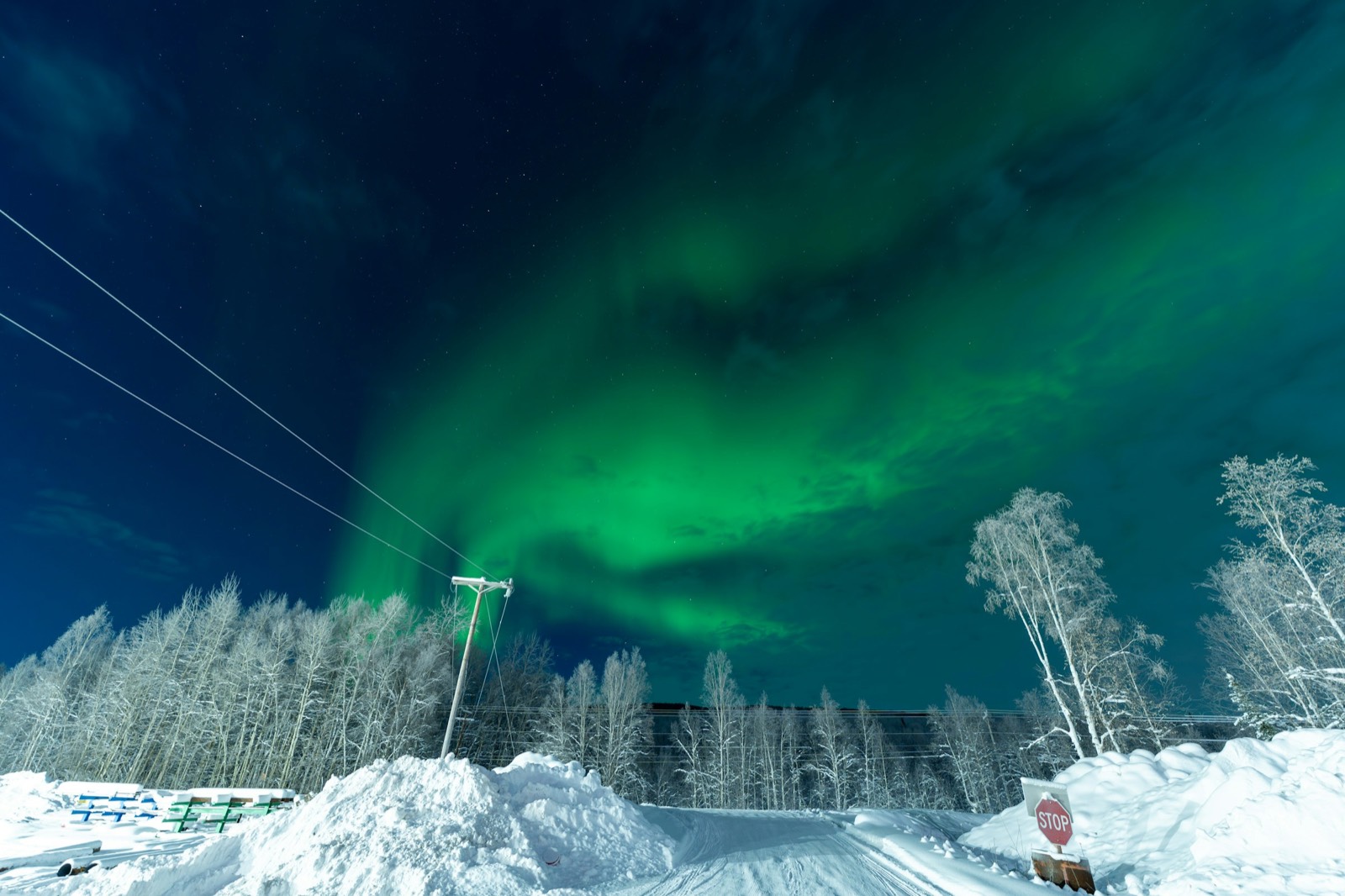
Yes, though it's past its peak. The Sun's roughly 11-year cycle reached its maximum around October 2024, so any guide selling "2026 solar maximum" is out of date. Activity is declining but still well above the quiet years: from January 2024 to September 2026, 32.6% of evening 3-hour periods (21:00–03:00 UT) reached moderate activity (Kp 3+), against 23.1% over the same stretch around the previous cycle's peak (mid-2013 to early 2016): about 40% more, by our count from the German Research Centre for Geosciences' Kp record.
Not in summer
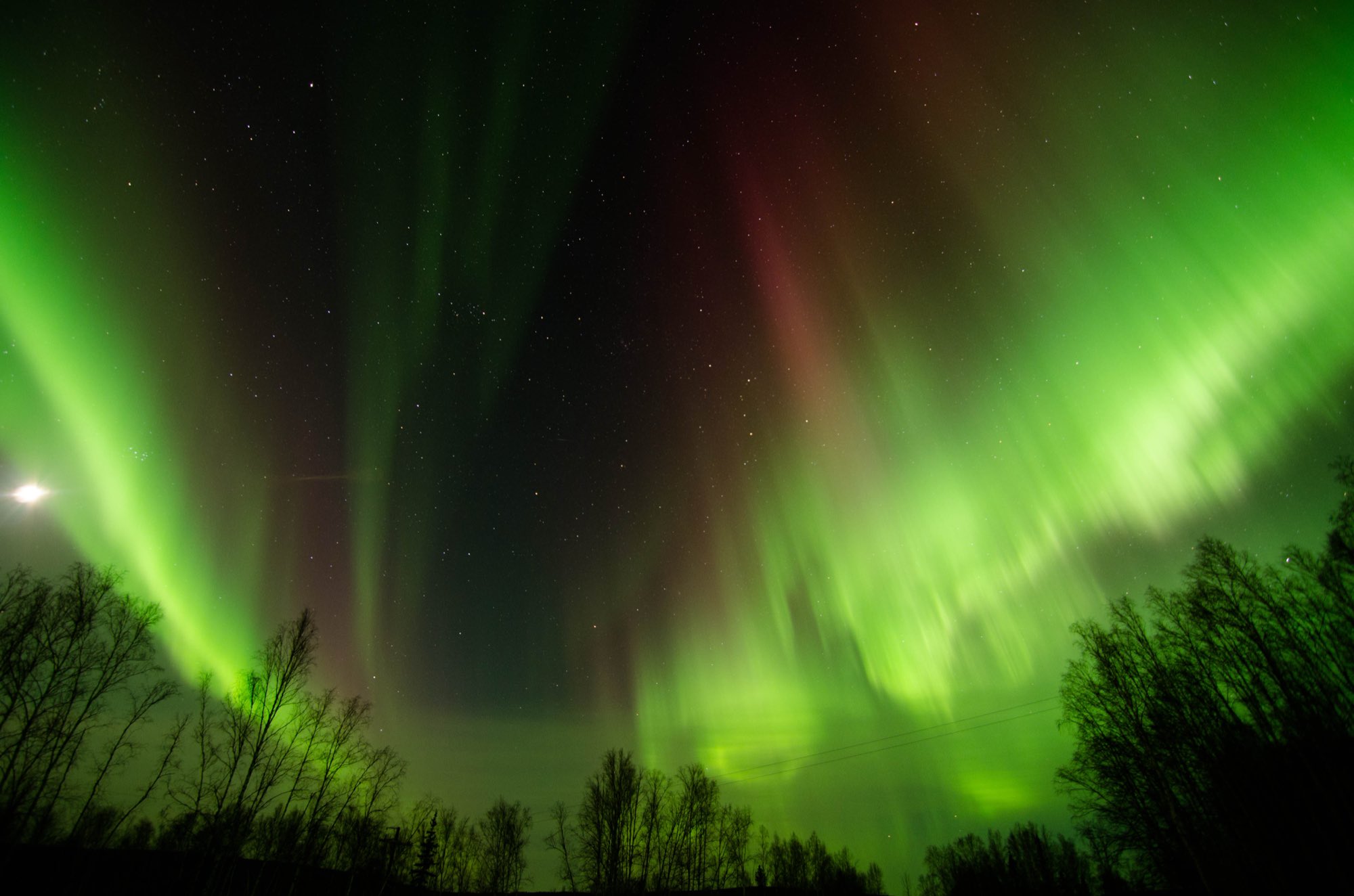
The aurora doesn't stop in summer. You just can't see it. From late April to late August the sky over Fairbanks never gets dark enough. The University of Alaska Fairbanks puts the viewing season at roughly 21 August to 21 April. That is why a summer Alaska cruise rarely shows the northern lights, and why a winter stay in Fairbanks or even Anchorage works better.
Alaska aurora timing FAQs
What is the best month to see the northern lights in Alaska?
March, closely followed by February. In Fairbanks, 49% of March nights and 45% of February nights have a clear spell between 9pm and 3am, against 26–27% in September and October.
Can you see the northern lights in Alaska in summer?
No. From late April to late August the sky over Fairbanks never gets dark enough. The season runs roughly 21 August to 21 April.
How many nights should I plan?
In February or March, three nights gives about a 50% chance of a proper display and eight to nine nights about 80%. From September to December, plan far longer.
What time of night is best?
Roughly 10pm to 2am local time, within an hour or two of midnight.
How cold is it?
January averages a low of −17°F (−27°C) at Fairbanks airport. March averages a high of 25°F (−4°C).
How we worked this out
Cloud: every hourly weather report from Fairbanks International Airport (station PAFA), 2000–2026, via the Iowa Environmental Mesonet's archive: 233,762 reports across 6,057 nights, 1 September to 20 April each season. Geomagnetic activity: the Kp index published by GFZ, the German Research Centre for Geosciences, matched hour by hour to the cloud reports. A night counts as clear if any hour from 9pm to 3am Alaska time reported no cloud layer beyond "few" (at most two-eighths of the sky). The multi-night figures count every real run of consecutive nights starting in each month, so they include cloudy streaks.
Limits: airport sensors only detect cloud below about 12,000 feet, so some "clear" nights had thin high cloud, and these odds are if anything slightly generous. Places outside Fairbanks, such as the hills north of town, can be clearer or cloudier than the airport. Temperatures: NOAA's 1991–2020 normals for Fairbanks airport. Viewing season: University of Alaska Fairbanks Geophysical Institute. Viewing hours and equinox effect: NOAA Space Weather Prediction Center. The thresholds and method are set out in full on how we work out the aurora odds.
Sources (6)
- Iowa Environmental Mesonet: hourly weather reports for Fairbanks International Airport (PAFA), 2000–2026
- GFZ German Research Centre for Geosciences: Kp index
- NOAA Space Weather Prediction Center: tips on viewing the aurora
- NOAA NCEI: US climate normals 1991–2020, Fairbanks airport
- University of Alaska Fairbanks Geophysical Institute: aurora forecast and viewing season
- Our calculation from the IEM and GFZ records above (checked 2026-09-23)