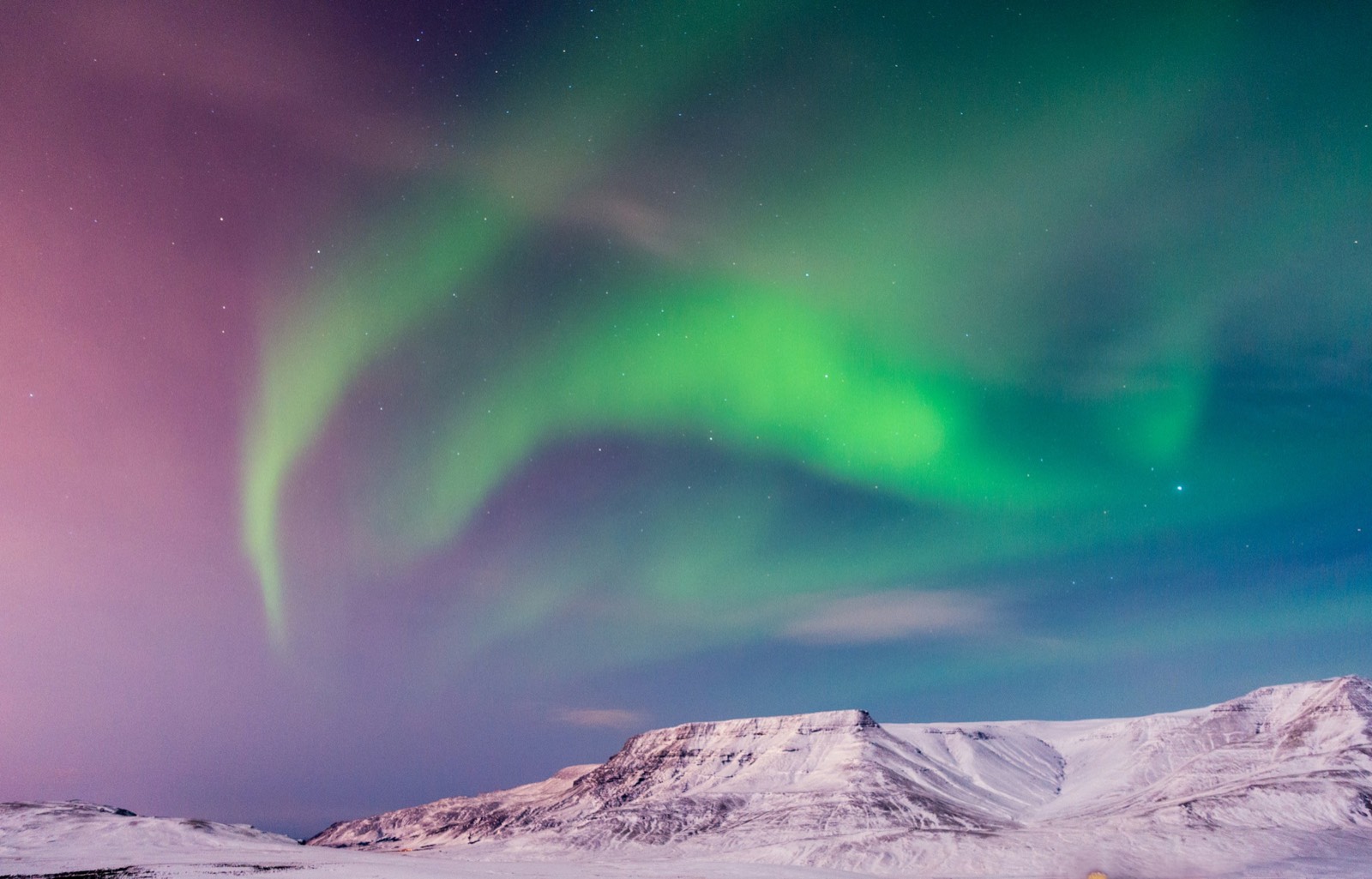
For geomagnetic activity, March, then February and September–October. December is the weakest month, despite the longest nights. Once cloud is counted, the measured odds of a proper display differ little from month to month.
Key takeaways
- In Reykjavík the sky is 70–75% covered in every month from September to April, so cloud should not decide which month you pick.
- Staying in Reykjavík, 3 nights give a measured 52–58% chance of a proper display, and you should plan 6–10 nights for an 80% chance.
- Watch roughly between 10pm and 1am, and if your dates are flexible, aim for the week either side of a new moon.
- By mid-April Reykjavík no longer gets fully dark; aurora buses run from late August and boats from 1 September, both until mid-April.
Month by month
In short March has the most nights reaching Kp 3, at 53%, and December the fewest, at 38%; Reykjavík's sky is 70–75% covered from September to April.
"Kp" is the standard 0–9 scale of geomagnetic activity. The Icelandic Met Office says even Kp 2 can be beautiful and Kp 3 dazzling. On our Iceland pages, as on our Abisko and Fairbanks pages, a proper display means Kp 2 or more plus a clear hour, and a strong show Kp 3 or more plus a clear hour. How we work out the odds defines both.
| Month | Dark hours (15th) | Dark from – to | Nights with Kp 3+ | Sky covered |
|---|---|---|---|---|
| September | 4h49 | 23:00 – 03:50 | 52% | 75% |
| October | 8h52 | 20:48 – 05:41 | 49% | 71% |
| November | 11h37 | 19:24 – 07:02 | 47% | 70% |
| December | 12h54 | 18:56 – 07:50 | 38% | 71% |
| January | 12h15 | 19:28 – 07:44 | 44% | 74% |
| February | 9h54 | 20:43 – 06:37 | 48% | 74% |
| March | 6h40 | 22:14 – 04:54 | 53% | 73% |
| April | none | twilight all night | — | 72% |
March: the most activity, not the clearest skies
In short March has the most geomagnetic activity, with 53% of nights reaching Kp 3, but its skies are no clearer than those of any other month.
Geomagnetic activity runs higher around the spring and autumn equinoxes. NOAA's Space Weather Prediction Center calls these the best seasons, and the long record shows it clearly. Plot the months and you get a W:
- High in September and October
- A dip in November and December
- Recovery in January
- A peak in February and March
The catch is darkness. The best geomagnetic months are the ones where darkness is shrinking fastest, so in March you'll stay up late, but you'll also get almost 12 hours of daylight.
Early March 2027
The first two weeks of March 2027 line up especially well: the new moon falls on 8 March (our calculation), with high activity and enough darkness.
Why not December?
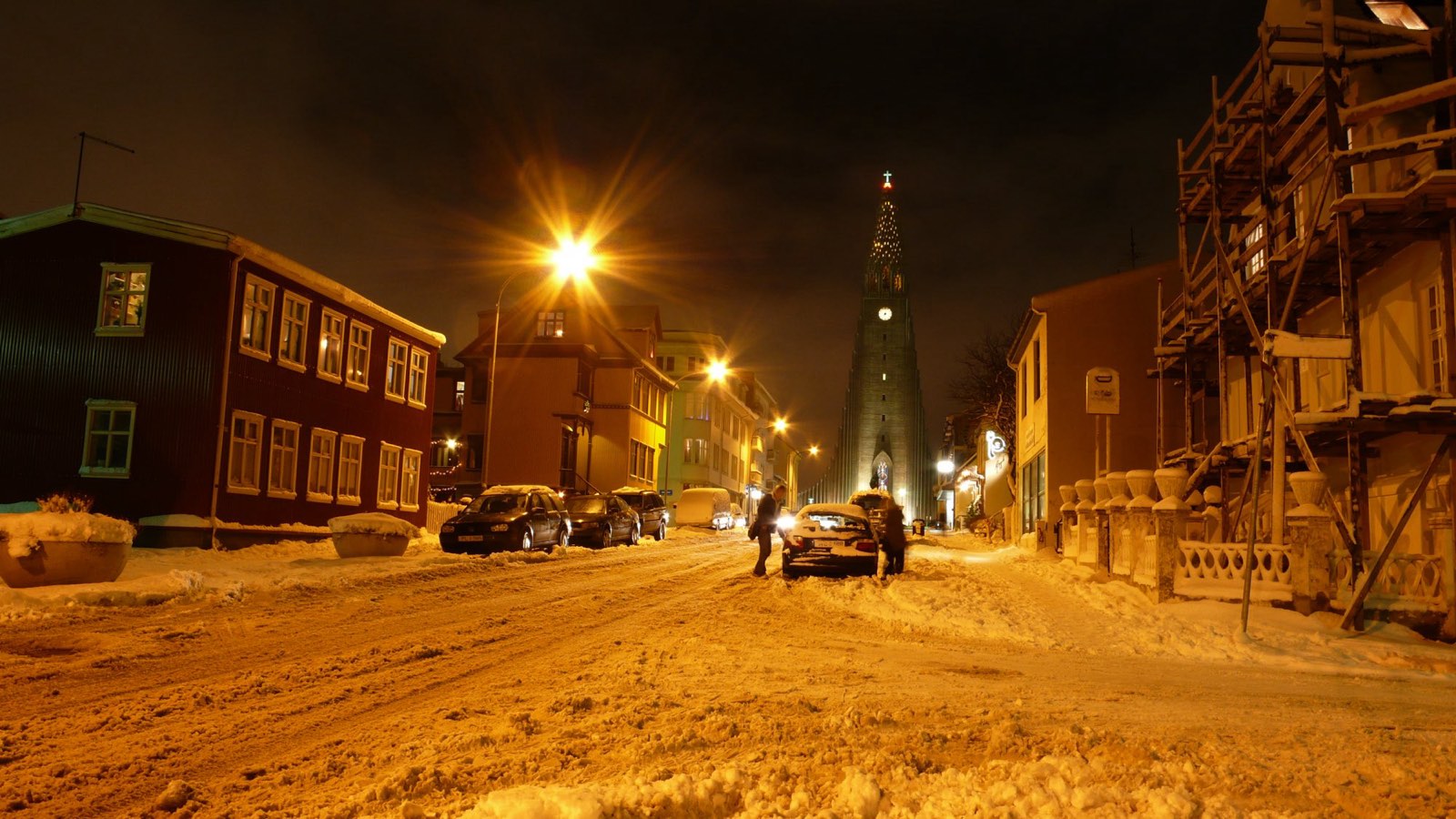
It's the most-booked month and the weakest for activity. It has almost 13 hours of darkness, but darkness isn't what limits you in December. Go for Christmas in Reykjavík, not for the odds.
If you can only go in autumn
September and October are strong for activity and come with milder weather and more daylight for driving. More on Iceland in October.
September
Short nights
- Under 5 hours of full darkness in mid-September
- Dark from about 11pm
October
The sweet spot of autumn
- Nearly 9 hours of darkness
- 49% of nights reaching Kp 3
How many nights to plan
In short Staying in Reykjavík, plan 6–10 nights for an 80% chance of a proper display; on the Keflavík peninsula, the measured figure is 8–12 nights.
Chance of at least one good night, measured. Reykjavík is the figure for staying in the city; Keflavík, out on the exposed peninsula, is the conservative one. Reykjavík reads about 10 points clearer, for reasons we can't pin down.
| Month | Proper display in 3 nights: Reykjavík · Keflavík | Strong show in 3 nights: Reykjavík · Keflavík | Nights for 80%, proper display: Reykjavík · Keflavík |
|---|---|---|---|
| September | 56% · 51% | 39% · 35% | 7 · 8 |
| October | 56% · 46% | 33% · 24% | 7 · 10 |
| November | 52% · 43% | 36% · 28% | 10 · 12 |
| December | 55% · 42% | 29% · 18% | 8 · 11 |
| January | 58% · 46% | 35% · 26% | 7 · 10 |
| February | 55% · 48% | 32% · 31% | 7 · 10 |
| March | 58% · 47% | 35% · 26% | 6 · 9 |
| April (to the 20th) | 54% · 39% | 31% · 18% | 7 · 10 |
What the measurements tell you
In short 3 nights in Reykjavík give a 52–58% chance of a proper display in any month, but a strong show can't be promised on a normal trip.
- Driving to clear sky is our estimate, not a measurement. Both weather stations are on the southwest coast, so the figures above are for staying put. Iceland is about 500 km across and different regions often have different weather, so a car, or a tour that drives to the clear patches, should do better. We can't say by how much.
- Bad weather comes in runs. A stalled low can bury four nights in a row. These figures already count real runs of nights, cloudy spells included, which is why they are lower than simple maths suggests.
Past the solar maximum
The Sun passed its peak in October 2024, so anything selling "2026 solar maximum" is out of date. Activity is still well above the quiet years: from January 2024 to September 2026, 32.6% of evening 3-hour periods (21:00–03:00 UT) reached Kp 3, against 23.1% over the same stretch around the previous cycle's peak (mid-2013 to early 2016). That is about 40% more, by our count from GFZ data. The 2026–27 and 2027–28 winters are good, not exceptional.
What time of night
- Visit Iceland: the aurora is most often seen around 11pm, roughly between 10pm and 1am.
- NOAA: 10pm to 2am as the general rule.
- Bursts: displays come in bursts of minutes, so most of the night is waiting.
- Clock: Iceland runs on UTC all year, with no summer time.
The moon
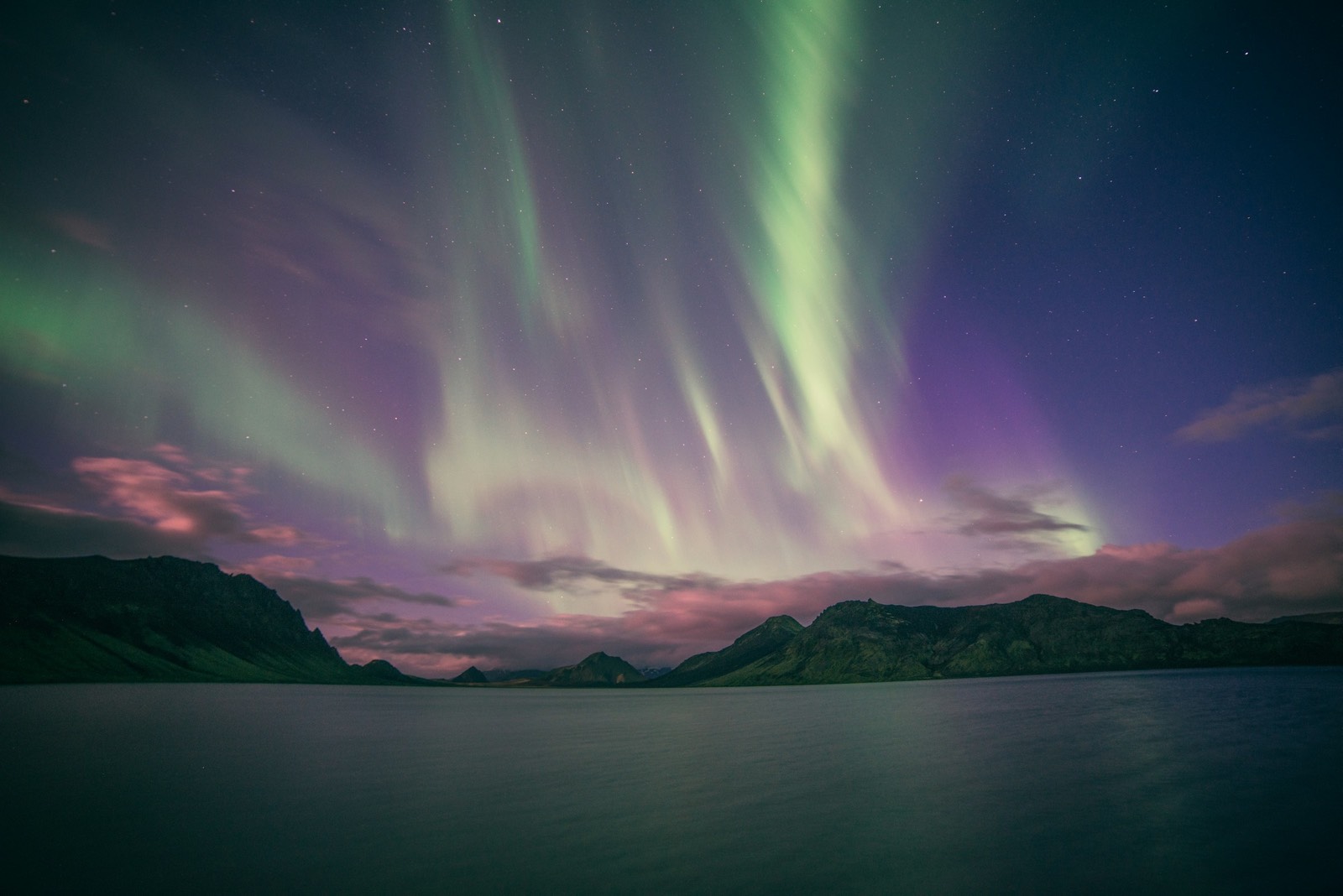
A full moon washes out faint aurora but barely matters on a strong night, and it lights up the landscape for photos. If your dates are flexible, aim for the week either side of a new moon.
| Winter | New moons (our calculation) |
|---|---|
| 2026 | 10 October · 9 November · 9 December |
| 2027 | 7 January · 6 February · 8 March |
Not in summer
The aurora doesn't stop in summer. You just can't see it. By mid-April the sky over Reykjavík no longer gets fully dark, and the long light lasts through summer. Aurora buses run from late August and boats from 1 September, both until mid-April.
Best time for the aurora in Iceland: FAQs
What is the best month to see the northern lights in Iceland?
For activity, March. Over 1996–2026, 53% of March nights reached Kp 3, the highest of any month, by our calculation from GFZ data. February, September and October are close behind. Once cloud is counted the months are close: measured over 2012–2026, three nights in Reykjavík gave a 52–58% chance of a proper display in every month from September to April.
Is December a good time?
It has the most darkness but the least geomagnetic activity: 38% of nights reach Kp 3, against 53% in March. Cloud is about the same as other months. Measured, it is the weakest month for a strong show (29% in three nights in Reykjavík, 18% at Keflavík), though a proper display is about as likely as in other months (55% in three nights in Reykjavík).
Which month has the clearest skies in Iceland?
None stands out. Reykjavík averages 70–75% cloud cover every month from September to April.
How many nights should I stay?
Three nights in Reykjavík is about a coin toss for a proper display: 52–58% by month, measured from airport weather reports 2012–2026 (39–51% at Keflavík). For an 80% chance, plan 6–10 nights (8–12 on the Keflavík figures). The reports miss thin high cloud, so these are slightly optimistic. Driving to clear sky should help, but we haven't measured by how much.
Can I see the northern lights in Iceland in summer?
No. From mid-April to late August the sky doesn't get dark enough.
Iceland month by month, and where to go
Sources (9)
- GFZ Potsdam, Kp index 1932–2026: monthly and per-night figures are our calculation (checked 2026-09-17)
- Icelandic Met Office, Reykjavík station 1 monthly means: 1996–2025 normals are our calculation (checked 2026-09-17)
- Reykjavík sunrise, sunset and darkness times, sunrise-sunset.org, cross-checked in-house (checked 2026-09-17)
- NOAA Space Weather Prediction Center: aurora, viewing hours and seasons (checked 2026-09-17)
- Visit Iceland: the auroras, typical viewing hours (checked 2026-09-17)
- Moon phases: our calculation (Meeus algorithm); check against the US Naval Observatory
- NOAA SWPC observed solar cycle indices (retrieved 2026-09-17)
- Iowa Environmental Mesonet: Reykjavík (BIRK) and Keflavík (BIKF) airport weather reports, 2012–2026 (checked 2026-09-24)
- Icelandic Met Office aurora forecast and cloud map (checked 2026-09-17)