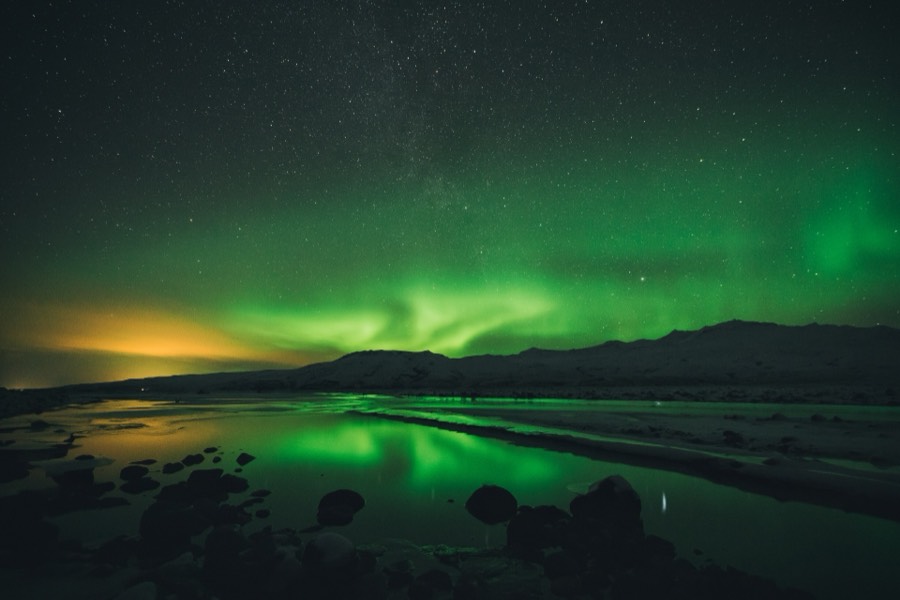
Chase the aurora by bus, jeep or boat
Bus from ISK 8,999 (Gray Line) · 3–5 h · Late Aug – mid Apr
A guided tour drives to wherever the forecast looks best, and most include a free retry if you see nothing.
Check dates on GetYourGuide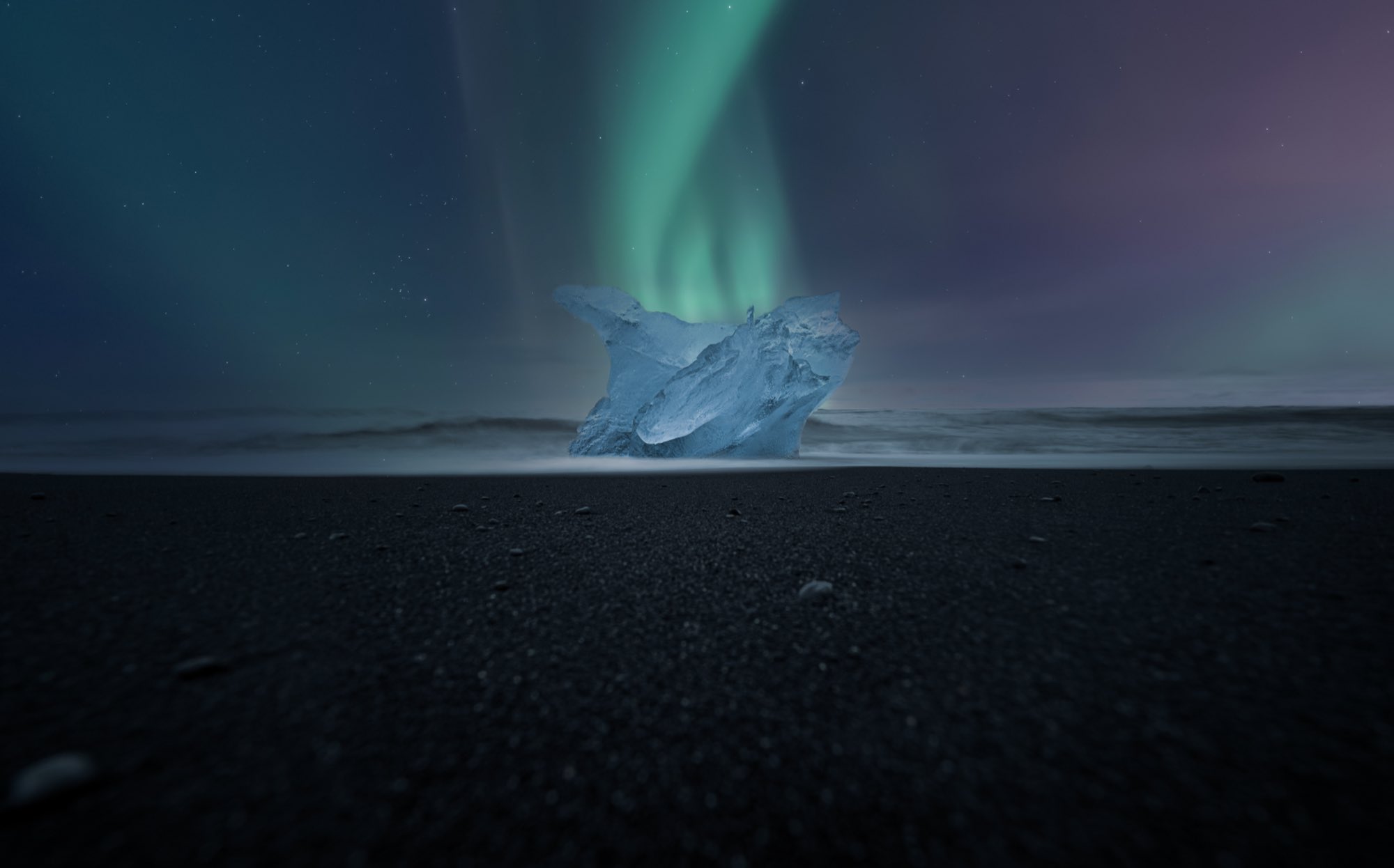
Home › Iceland
Diamond Beach, Jökulsárlón, Iceland. Photo: Richard Banton, CC BY 2.0
Iceland sits under the aurora. Cloud, not the aurora, is what decides whether you see it.
Iceland is the easiest aurora trip from Europe and the US East Coast: about 3 hours' flying from London and 5 from Boston. Winters are mild for the latitude (Reykjavík's coldest month averages +0.7°C) but wet, windy and cloudy. Measured from airport weather reports, three nights in Reykjavík is about a coin toss for a proper display, so plan 6–10 nights for an 80% chance, be ready to drive to wherever the sky is clear, and fill the days with things you'd enjoy even if it never clears.
Some links on this page go to booking partners. If you book through them we may earn a commission at no extra cost to you. It never changes what we recommend. How we make money
Most aurora nights in Iceland start after dinner. You leave Reykjavík's street lights behind, drive out, check the Met Office cloud map, and wait, with the engine off.
Reading the cloud map
It's the thing everyone misreads. On the Icelandic Met Office aurora forecast, white means clear sky and green means cloud. You want the white patches.
To your eye a typical good night is a pale grey-green moving band; your phone shows it vivid green, because the camera collects light for seconds.
Days are short. On 15 December Reykjavík gets 4 hours 23 minutes of daylight; by 15 March it's 11 hours 45.
Bus from ISK 8,999 (Gray Line) · 3–5 h · Late Aug – mid Apr
A guided tour drives to wherever the forecast looks best, and most include a free retry if you see nothing.
Check dates on GetYourGuide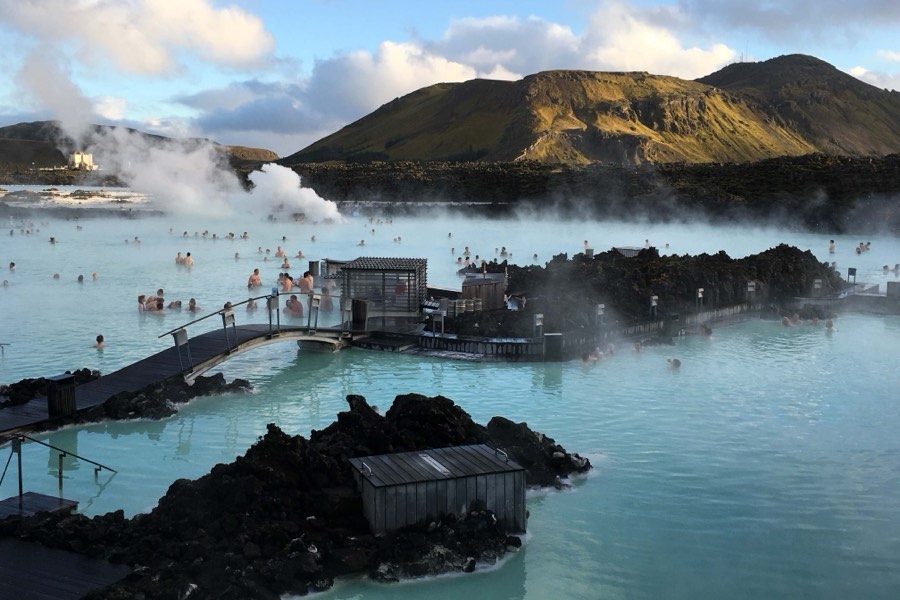
Blue Lagoon ISK 15,990–17,490 (mid-Jan) · City pools ISK 1,500
Milky blue water in a black lava field. Reykjavík's public pools cost about a tenth as much.
Check dates on GetYourGuide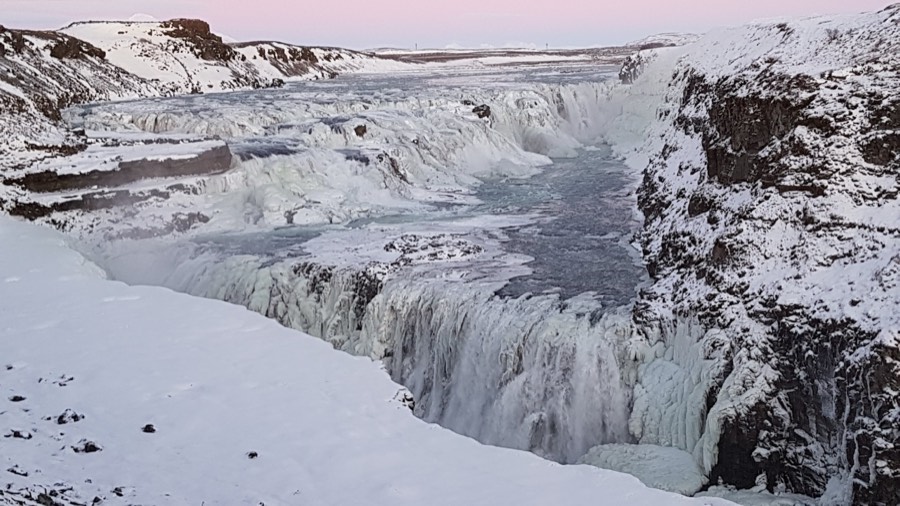
Þingvellir, Geysir, Gullfoss · 7–8 h day · Coach from ISK 9,999 (Gray Line)
A rift valley, a geyser that erupts up to 30 m and an ice-rimmed waterfall. The classic first day trip.
Check dates on GetYourGuide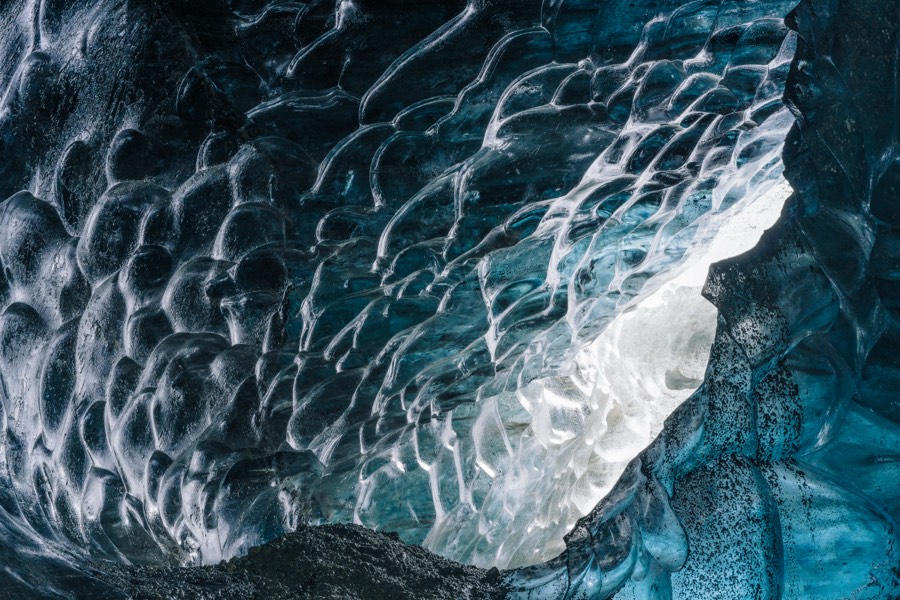
Natural caves ISK 19,900–34,900 · Oct/Nov – Apr
Three different things: a natural blue cave under Vatnajökull (winter only), the Katla cave near Vík, and a man-made tunnel in Langjökull.
Check dates on GetYourGuide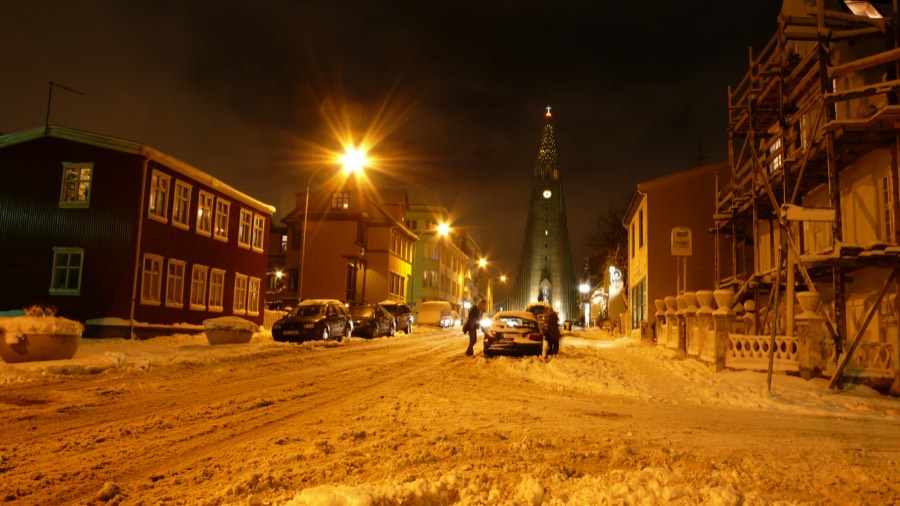
ISK 14,500 (Elding) · 2–3.5 h · Daily, all year
Winter beats summer: Elding saw whales on 94% of winter tours in 2024, against 90% in summer.
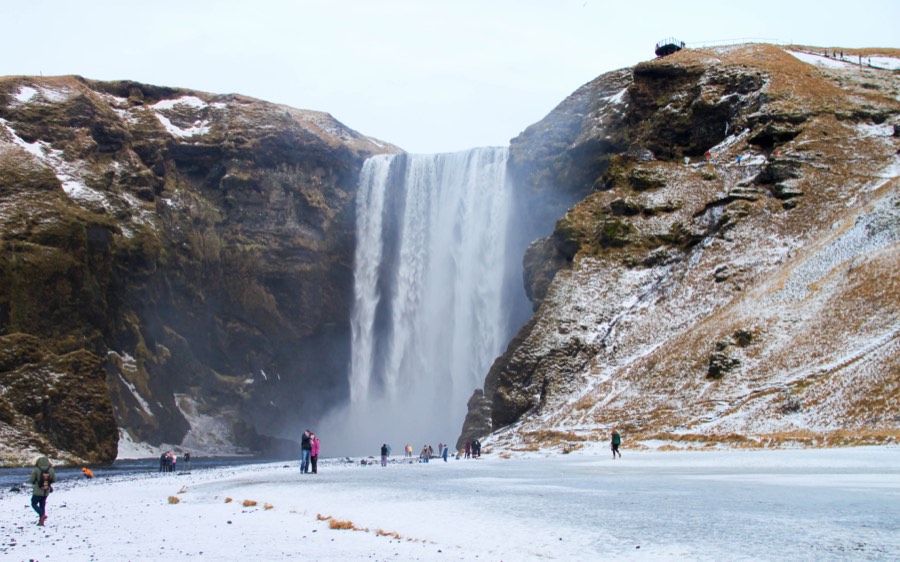
Skógafoss ~156 km from Reykjavík · Free
Seljalandsfoss, 60 m Skógafoss and the black beach at Reynisfjara. The path behind Seljalandsfoss closes in the cold.
Every winter month is about as cloudy as every other, so darkness and geomagnetic activity pick the month: March and autumn get more activity, December the most darkness but the least activity. The full month-by-month answer covers every month; there are guides to October, November, February and March.
Anywhere dark with a view to the north: on a quiet night the aurora is a low arc across the northern sky.
One myth to drop
The north of Iceland is drier, not clearer. See where to see the northern lights in Iceland.
Iceland is expensive
In 2025 restaurant and hotel prices were at 173 against an EU average of 100 (Eurostat), the highest of the Nordic aurora countries.
Tours or a car
You can do Iceland without a car: aurora, Golden Circle, south coast and ice cave tours all leave from Reykjavík. A car lets you chase clear sky, which should help your odds by an amount we can't measure; the catch is winter night driving, on roads last cleared in the morning.
Reykjavík, then the south coast
Your first nights in Reykjavík, where tours pick up and boats leave. Then sleep near what you came to see: Vík, or Höfn and Skaftafell for Jökulsárlón and the ice caves.
7 nights, two regions
Two or three nights in Reykjavík, two or three on the south coast, and the Blue Lagoon on the way to or from the airport. Day by day, with drive times, in the itinerary.
For the cloud map, road conditions and the aurora forecast on the go.
Yes. Iceland sits under the auroral oval, so on a clear, dark night between late August and mid-April the aurora is often overhead or on the northern horizon. Cloud is the usual reason people miss it.
Staying in Reykjavík, three nights gives a 52–58% chance of a proper display (Kp 2 or more plus a clear hour), and 6–10 nights about 80%. Keflavík, the conservative figure, gives 39–51% and needs 8–12 nights. That's measured from airport weather reports, 2012–2026, and slightly optimistic, because the reports miss thin high cloud. A strong show (Kp 3 or more) within three nights is 29–39% in Reykjavík. Driving to clear sky should do better; that part is our estimate.
Strong displays, yes. Faint ones get lost in the street lights. Grótta lighthouse and Öskjuhlíð hill are the easiest darker spots in the city.