Alaska (Fairbanks)
Best: late Feb – Mar · Season: ~21 Aug – 21 Apr
February and March have nearly twice the clear nights of September and October, and March is far less cold than January. The full month-by-month odds are on our Alaska page.
Home › Best time
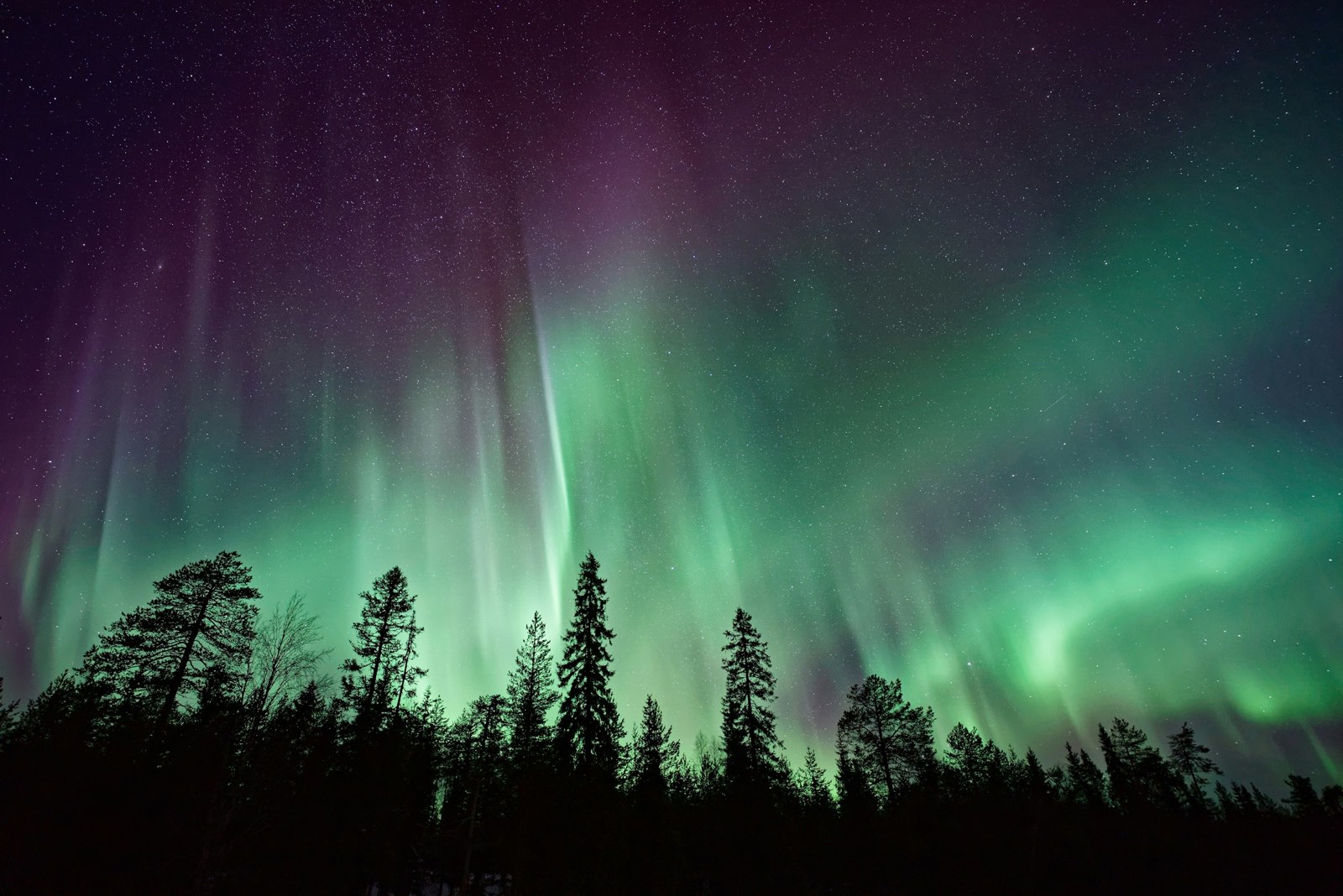
Location not recorded. Photo: Vincent Guth, Unsplash License · 10-second exposure: brighter than the eye sees
Late February to March, for most places. March is an equinox month, when geomagnetic activity runs highest, and at the places with long weather records it is as clear as or clearer than autumn. Go near a new moon if you can.
Four things decide a month: how active the aurora is, how dark the nights are, how often the sky is clear, and the moon. They peak at different times of year, so the best month is where they overlap.
The short version: March is the best all-round month, February is close behind, and December, the most booked month, is the weakest for activity. Autumn has the activity but, in Alaska and Canada, much more cloud.
Activity (Kp) is a planet-wide measure, so one column covers everywhere. Darkness and cloud depend on the place, so we show the three places we measured the same way, night by night. Kp is counted two ways on this site; how we work out the odds explains both, and what a clear night means.
| Month | Evening 3-hour periods at Kp 3+ (1932–2026) | Full darkness, Reykjavík | Clear nights, Reykjavík | Clear nights, Abisko | Clear nights, Fairbanks | In short |
|---|---|---|---|---|---|---|
| September | 36.5% | 4 h 49 min | 43% | 45% | 26% | Equinox activity, short nights; cloudy in Alaska |
| October | 35.3% | 8 h 52 min | 46% | 50% | 27% | Good activity, proper darkness; still cloudy inland in North America |
| November | 31.0% | 11 h 37 min | 50% | 58% | 35% | Abisko's clearest month; activity dipping |
| December | 27.9% | 12 h 54 min | 54% | 54% | 37% | Most darkness, least activity, most bookings |
| January | 30.5% | 12 h 15 min | 50% | 55% | 44% | Activity recovering, inland skies clearing; the coldest month |
| February | 36.0% | 9 h 54 min | 47% | 55% | 45% | Strong on every count |
| March | 39.2% | 6 h 40 min | 48% | 48% | 49% | Most active month; clearest in Fairbanks; milder |
| April | 38.2% | none (twilight all night) | 44% (to the 20th) | not measured | 40% (to the 20th) | Over in Iceland; the last weeks in Fairbanks |
The aurora isn't seasonal, but geomagnetic activity is. It runs higher around the spring and autumn equinoxes, a pattern NOAA's Space Weather Prediction Center describes as the best seasons for aurora watching.
Scientists call it the Russell–McPherron effect, after a 1973 paper: near the equinoxes, the angle between the Earth's magnetic field and the Sun's makes it likelier that energy from the solar wind gets in.
Count whole nights instead of 3-hour periods, over a shorter record, and the numbers are higher but the pattern is the same. The share of nights (1996–2026, GFZ data) whose most active three hours reached Kp 3 or more:
Plot the months and you get a “W”:
That makes December the odd one out
It is the most booked month, has the longest nights, and is the quietest geomagnetically. It can still be wonderful. It is just not the best bet.
You need a properly dark sky. That rules out summer everywhere on this site.
More darkness isn't always more aurora
By mid-March Reykjavík still gets 6 h 40 min of full darkness, which covers the 10pm–2am window NOAA gives as the best hours. So the shorter nights of March cost you little.
Two darkness facts people get wrong:
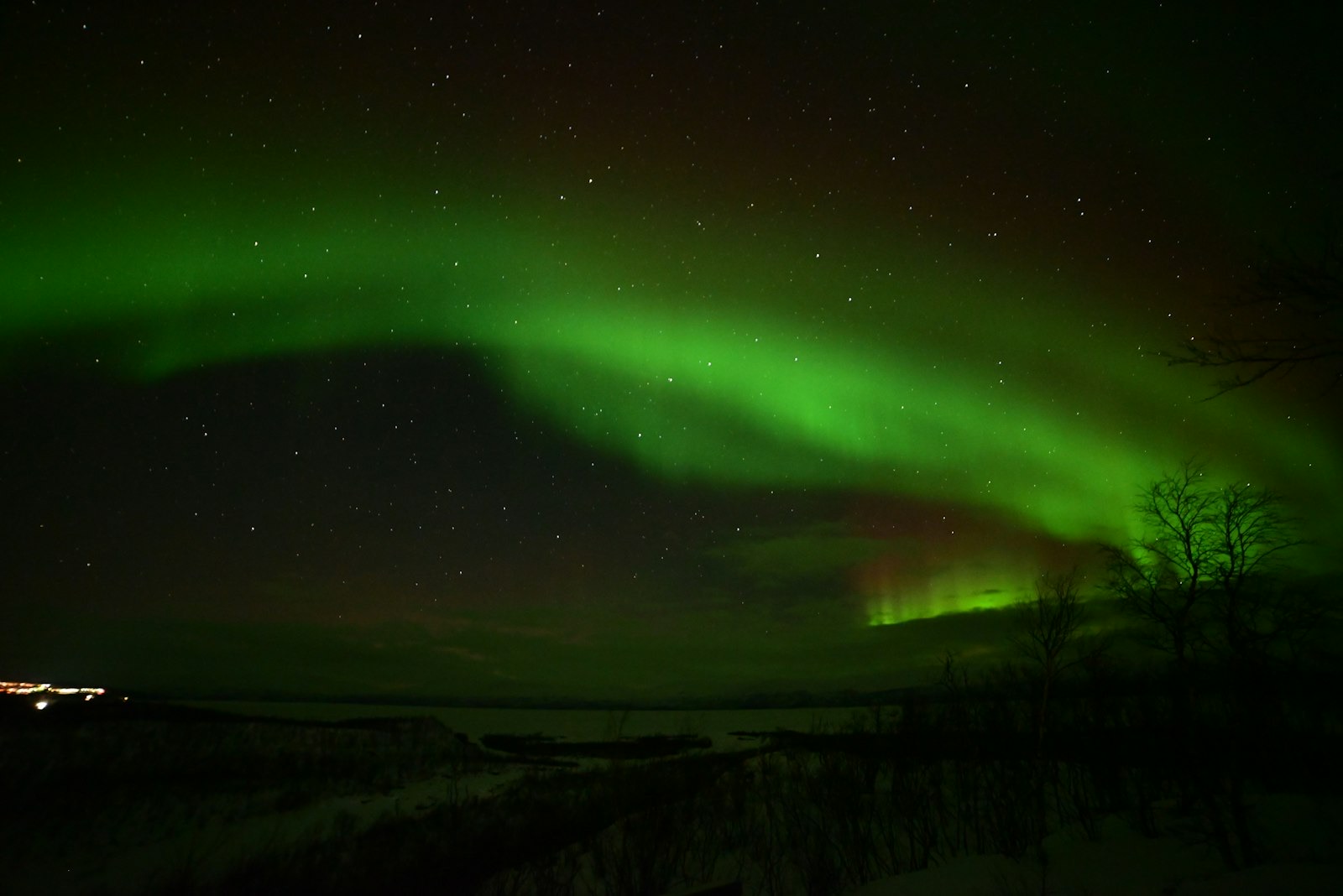
Each column below was measured or modelled a different way, so read down a column, never across. It tells you which month is clearer in that place, not which place is clearer.
| Month | Yellowknife: clear hours (measured) | Reykjavík: sky covered (measured) | Tromsø: “clearer” time (modelled) | Rovaniemi: overcast or mostly cloudy (modelled) |
|---|---|---|---|---|
| September | — | 75% | 34% | 68% |
| October | 12% | 71% | 26% | 78% |
| November | 17% | 70% | 23% | 80% |
| December | 30% | 71% | 21% | 83% |
| January | 32% | 74% | 21% | 84% |
| February | 34% | 74% | 22% | 83% |
| March | 38% | 73% | 24% | 77% |
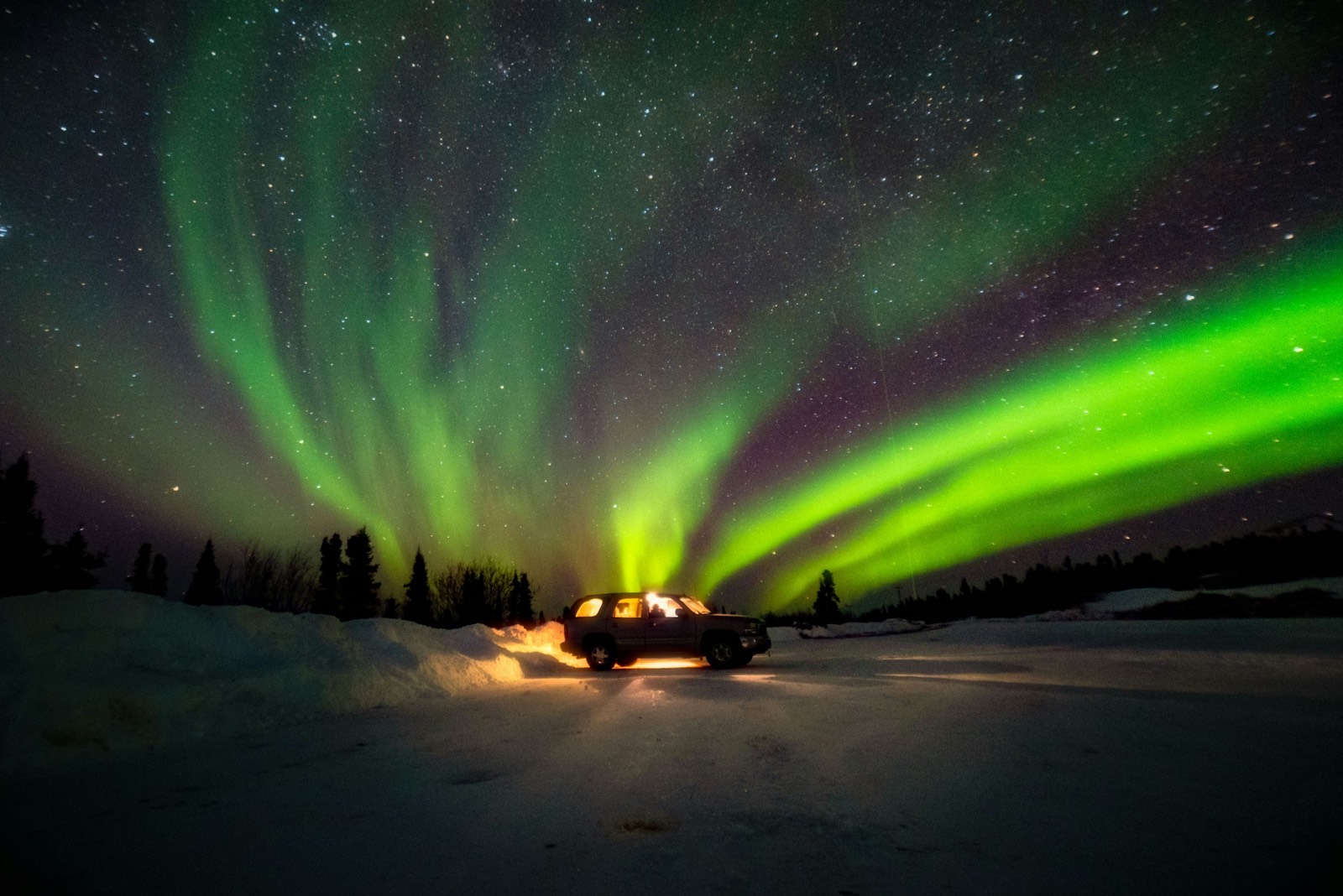
A full moon washes out a faint aurora. On a bright night it barely matters, and it lights up the landscape for photos. If you can, plan around the new moon.
| New moon | Full moon |
|---|---|
| 10 October 2026 | 26 October 2026 |
| 9 November 2026 | 24 November 2026 |
| 9 December 2026 | 24 December 2026 |
| 7 January 2027 | 22 January 2027 |
| 6 February 2027 | 20 February 2027 |
| 8 March 2027 | 22 March 2027 |
Best: late Feb – Mar · Season: ~21 Aug – 21 Apr
February and March have nearly twice the clear nights of September and October, and March is far less cold than January. The full month-by-month odds are on our Alaska page.
Best: Sep – Mar · Standout: early March
Cloud is about the same every month, so pick by activity and darkness: late September to October, or February to mid-March. December is the quietest month for activity.
Best: Nov – Feb · Sky Station: 19 Oct – 27 Mar
November to February have the most clear nights, and January and February give the best odds of a proper display. The Aurora Sky Station runs its night visits from 19 October 2026 to 27 March 2027.
Best: Sep – Oct, Feb – Mar · Tours: Sep – early Apr
The modelled cloud barely changes through winter, so the equinox months win on activity. February 2026 was the busiest winter month on record for the region's hotels, so book early.
Best: March · Avoid: October
March is the clearest month, milder than January, and the month of the snow castle festival. October is the cloudiest month, and the territory's tourism board leaves it out of its aurora seasons.
Best: Sep, Mar · Christmas: cloudiest
The model puts December and January at their cloudiest. For the aurora, go in September or March, or head further north.
Yes. The cycle has peaked, but activity is still high. The 2026–27 and 2027–28 seasons are good, not exceptional.
March for most places. It is the most active month of the year in the geomagnetic record, and in Fairbanks it has the most clear nights. February is a close second.
It works, but it isn't the best. December has the longest nights and the lowest geomagnetic activity of the season: on 38% of nights (1996–2026) activity peaks at Kp 3 or more, against 53% in March.
Not in the places on this site. The aurora is still there, but the sky never gets dark enough from about late April to late August.
Roughly 10pm to 2am local time, within an hour or two of midnight, according to NOAA. Strong nights can start earlier and run later.
It washes out faint displays but not bright ones. If you can, plan your nights around the new moon; the first half of March 2027 is the standout window.