Aurora Glass House Experience at Cleary Summit
You wait inside a glass house on Cleary Summit instead of standing in the snow. A good choice for a January trip, or for anyone who feels the cold.
- 5 h
- 4.4★ (38)
Home › Alaska › Fairbanks › Winter weather
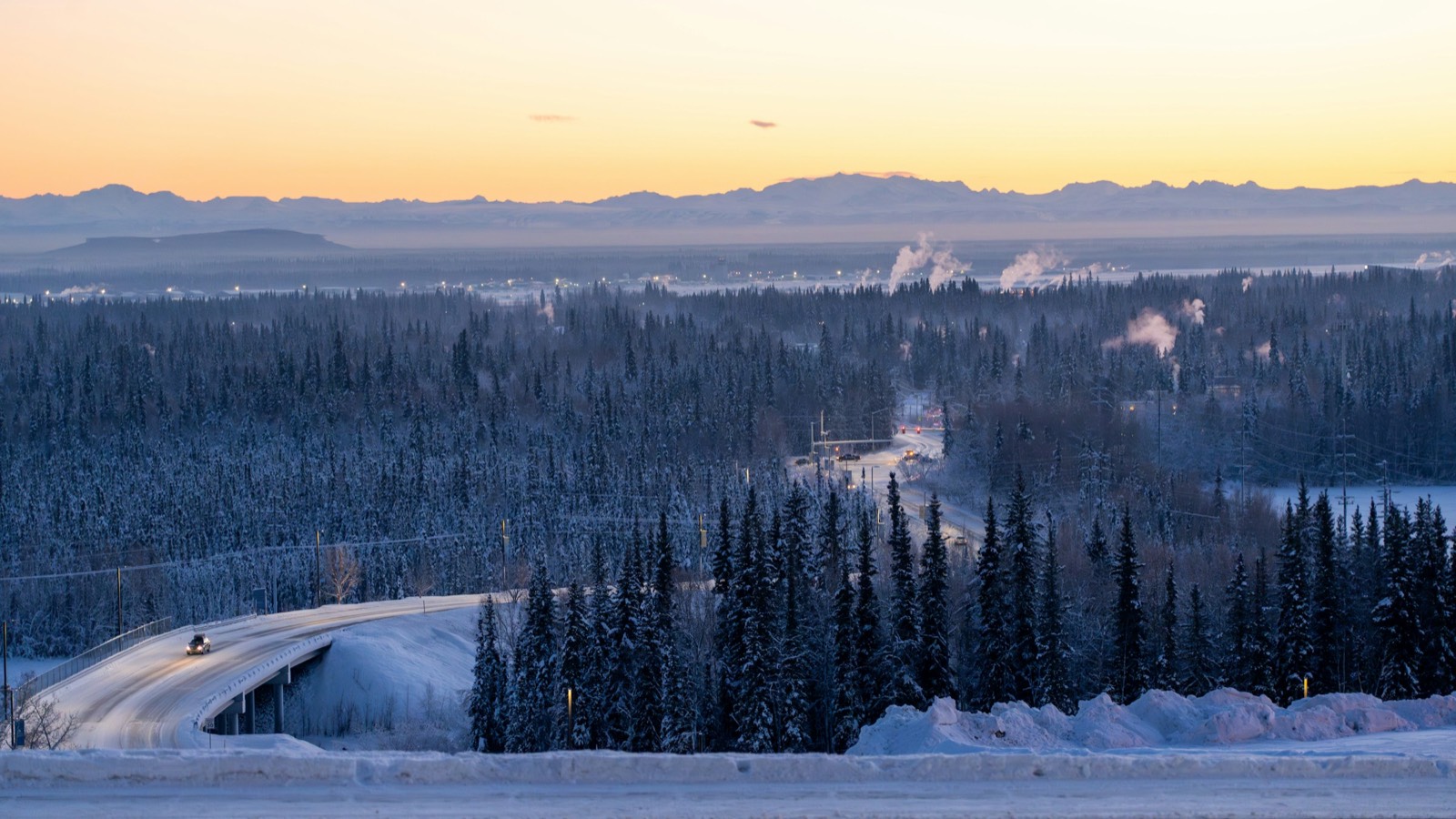
University of Alaska Museum of the North, Fairbanks, Alaska. Photo: Yuhan Du, Unsplash License
January averages a low of −17°F (−27°C); by March the average high is back up to 25°F (−4°C), which is the easiest month to stand outside at night.
Key takeaways
Some links on this page go to booking partners. If you book through them we may earn a commission at no extra cost to you. It never changes what we recommend. How we make money
In short Average highs drop from 55°F (13°C) in September to 1°F (−17°C) in January, then climb back to 25°F (−4°C) by March.
| Month | Average high | Average low |
|---|---|---|
| September | 55°F (13°C) | 36°F (2°C) |
| October | 34°F (1°C) | 18°F (−8°C) |
| November | 12°F (−11°C) | −4°F (−20°C) |
| December | 4°F (−15°C) | −13°F (−25°C) |
| January | 1°F (−17°C) | −17°F (−27°C) |
| February | 12°F (−11°C) | −11°F (−24°C) |
| March | 25°F (−4°C) | −3°F (−20°C) |
In short Dry and sharp: from December to February average lows run from −11°F to −17°F, and your breath freezes on your scarf and eyelashes.
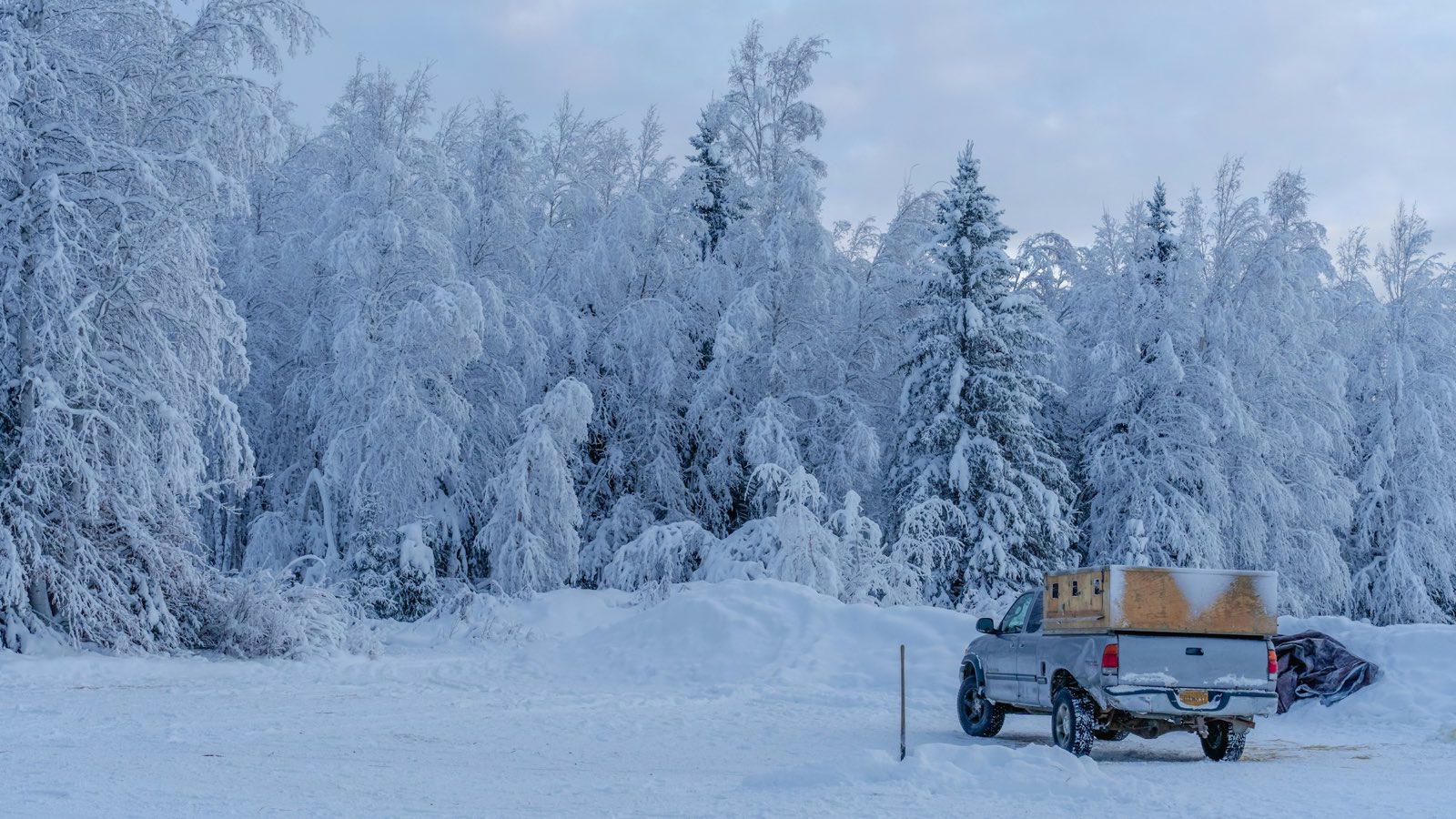
From December to February, average lows at the airport run from −11°F to −17°F. At those temperatures the air feels dry and sharp, and your breath freezes on your scarf and eyelashes.
Standing still is what gets you
An hour watching the northern sky at −20°F is colder than a brisk walk at the same temperature.
Then there's −40, where Fahrenheit and Celsius meet. It swings wildly from year to year, so plan for it, but don't expect it.
Why the hills can be milder
Fairbanks sits in a valley, and on still, cold nights the coldest air settles at the bottom. The hills around town can be milder than the airport reading, and low spots colder.
In short Very dark: the shortest day has 3 h 41 min of sun, and a little over six hours of usable light with twilight either side.
By late February and March the days are long again, but the nights are still properly dark for the aurora, which is one reason we recommend those months. The month-by-month aurora odds are on best time to see the northern lights in Alaska.
Explore Fairbanks' advice is "layers, layers, layers", in wool, synthetics and fleece. For an aurora night, top to toe:
Don't want to buy all this? Some aurora tours wait indoors, like the glass house on Cleary Summit, or in heated yurts, like Chena's tour up Charlie Dome, so you can step out when the sky lights up and back in to warm up. Chena Hot Springs lends parkas for its ice museum. Ask your tour operator what outerwear they provide before you pack.
You wait inside a glass house on Cleary Summit instead of standing in the snow. A good choice for a January trip, or for anyone who feels the cold.
Price is GetYourGuide's 'from' price for 15–20 February 2027, converted from Indian rupees at 95.54 per US dollar (the booking sites' own rate on 23 September 2026) and rounded to the nearest $5.
Batteries drain fast in deep cold.
January is coldest, with an average high of 1°F (−17°C) and an average low of −17°F (−27°C) at the airport. March warms to an average high of 25°F (−4°C).
About 7 days a year on average from 2005 to 2025, but anywhere from none to 26 in a given year.
On the winter solstice the sun is up for 3 hours 41 minutes, with about six hours of usable light including twilight.
Wool or synthetic base layers, a fleece mid layer, a down parka and snow pants, insulated boots, mittens, a hat and a face covering, plus hand warmers.
−66°F (−54°C), on 14 January 1934.