Anywhere dark with an open view to the north. Þingvellir is the closest dark sky to Reykjavík; Jökulsárlón is the most spectacular.
Key takeaways
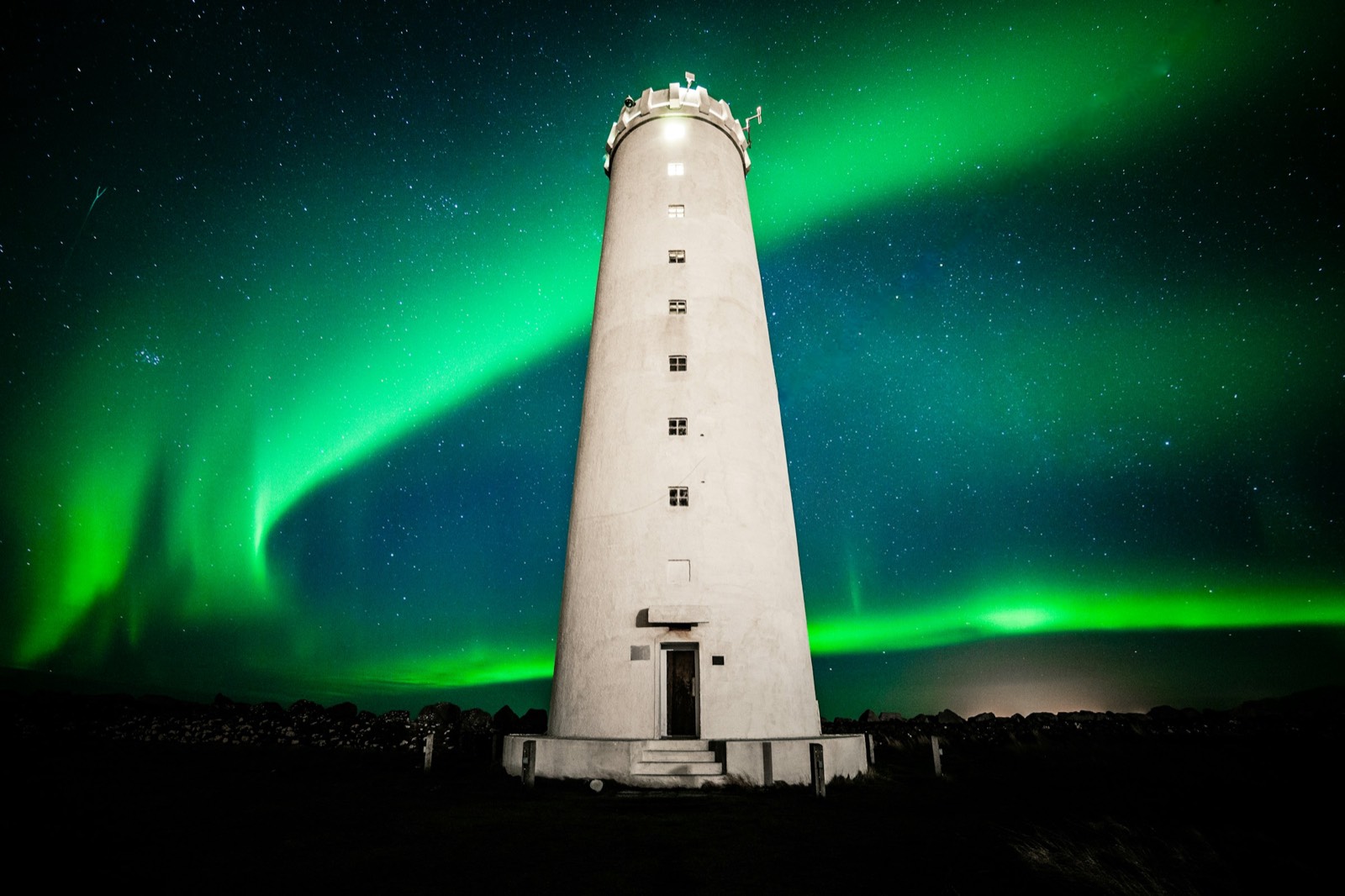
Without a car, try Grótta lighthouse or the Öskjuhlíð hill under Perlan, but Grótta's causeway goes under at high tide, so check the tide tables.
Vík's sea stacks and Reynisfjara face south, so they work only on strong nights when the aurora spreads overhead.
The north of Iceland is drier, not clearer: Akureyri was the cloudiest of the six weather stations compared.
On the night, use the Icelandic Met Office cloud map, where white is clear and green is cloud, then check the road on umferdin.is.
Some links on this page go to booking partners. If you book through them we may earn a commission at no extra cost to you. It never changes what we recommend. How we make money
The places, compared
In short Þingvellir is the closest real dark at about 45 minutes, Kirkjufell gives the classic photo, Jökulsárlón has reflections, and south-facing Vík suits strong nights only.
Distances: Vegagerðin distance tool (Vík, Jökulsárlón) and secondary sources (others). Times are good-conditions driving; allow more in winter. Kirkjufell is about 3–3.5 h in winter.
Place
From Reykjavík
Faces north?
Best for
Grótta lighthouse
~5 km, 15 min
Yes, over the bay
No car, strong nights
Öskjuhlíð / Perlan hill
In the city
Trees screen street lights
No car
Þingvellir
~44–48 km, ~45 min
Yes, over the lake
Closest real dark
Kirkjufell
~175 km, ~2.5 h
Yes
The classic photo
Vík & Reynisfjara
186 km, ~2 h
No, faces south
Strong nights only
Jökulsárlón
379 km, ~4.2 h
Yes
Reflections, darkness
In and around Reykjavík
In short Grótta lighthouse and Öskjuhlíð hill work without a car, and Rauðhólar in Heiðmörk is about 15 minutes out, but Grótta's city glow can wash out a faint arc.
Grótta lighthouse
At the tip of Seltjarnarnes
The easiest spot to reach, according to Visit Reykjavík
A clear northern horizon over the bay
But one of the least dark spots, so a faint arc can wash out
The causeway goes under at high tide: check the tide tables before you walk out at night
Öskjuhlíð
The hill under Perlan
Works because trees screen the street lights
Perlan's observation deck closes at 22:00, so use the hill and trails instead
Heiðmörk
The south-east edge of the city
Red volcanic craters at Rauðhólar, about 15 minutes out
Without a car
These are your options. Buses stop around midnight, right in the middle of the aurora window. Or take a northern lights boat tour from Reykjavík: dark water and an open horizon within about 15 minutes of the Old Harbour, with no driving.
Þingvellir: the closest real dark
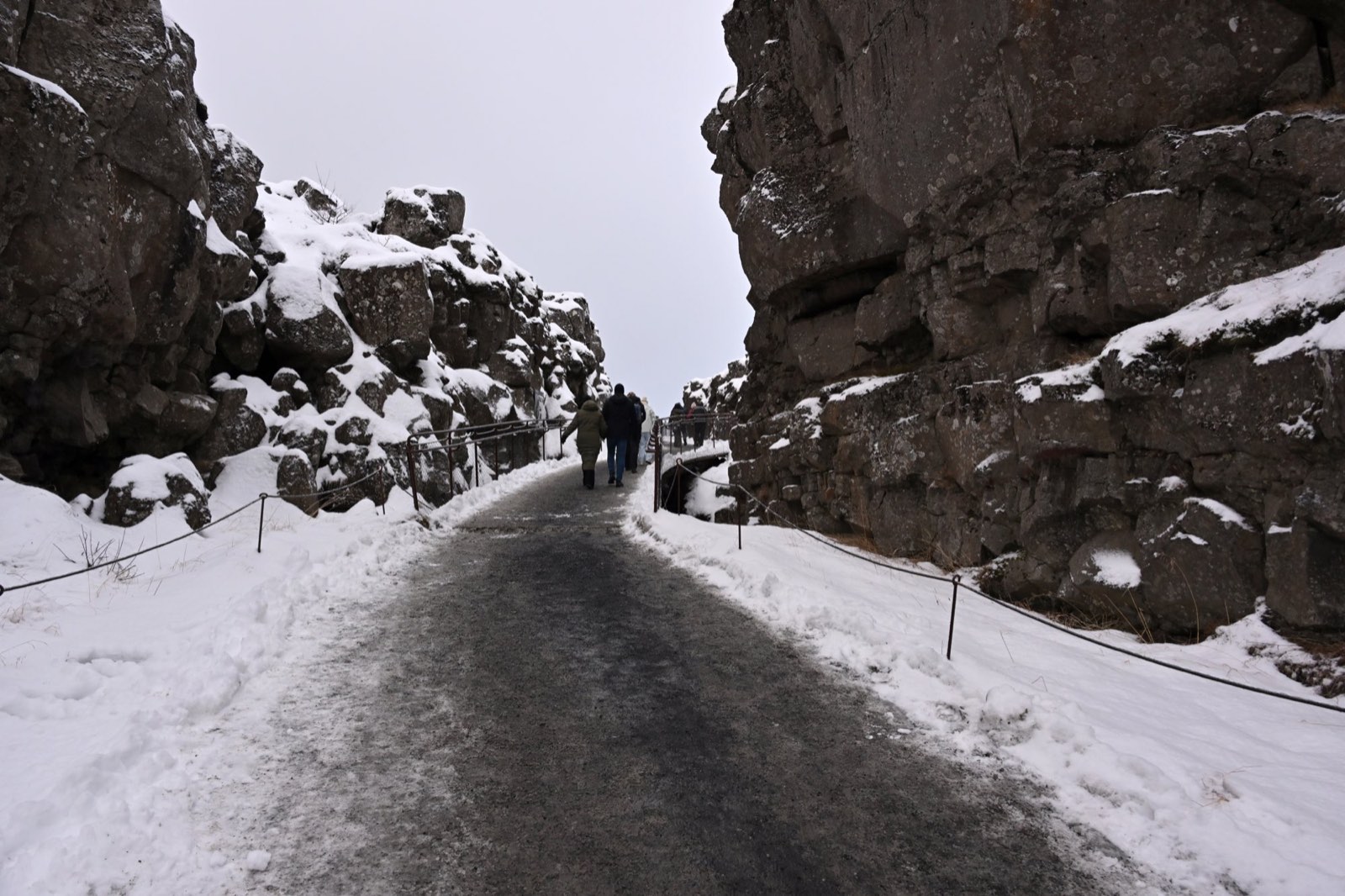
About 45 minutes from Reykjavík, the rift wall at Almannagjá blocks the city's glow to the south-west and leaves an open northern sky over Þingvallavatn lake. More in our Golden Circle guide.
Parking: ISK 1,000 per car per day, covering all three main car parks.
Ice: the paths and the boardwalk to Öxarárfoss turn to sheet ice in winter, so bring microspikes.
About 2.5 hours from Reykjavík in good conditions, 3–3.5 in winter.
Why go
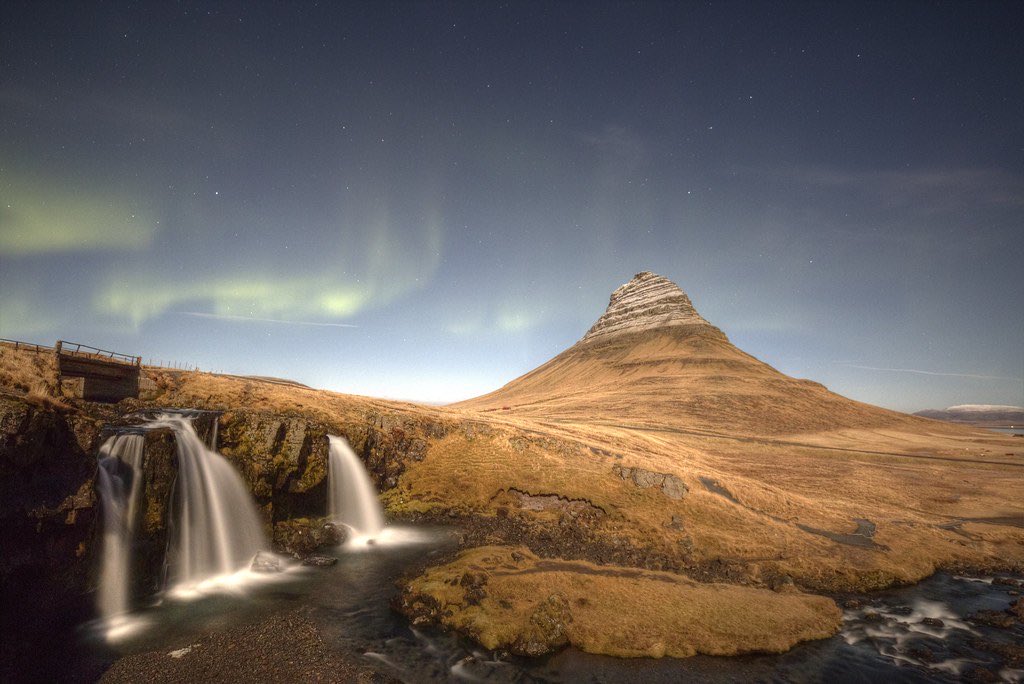
Widely called Iceland's most-photographed mountain
It faces the right way: from the small Kirkjufellsfoss waterfall, the classic shot points almost due north
The catches
The mountain fills a lot of the sky, so a low, quiet arc can hide behind it. It works best on active nights
The waterfall path ices
The small car park fills on high-forecast nights
Kirkjufell, Grundarfjörður, Iceland. Photo: Alexandre Breveglieri, CC BY 2.0 · 10-second exposure: brighter than the eye sees
Jökulsárlón and Diamond Beach
The glacier lagoon is the best reflection site in Iceland. Calm water doubles the aurora, icebergs catch the green, and the wet black sand of Diamond Beach is a second mirror. The nearest town, Höfn, is 65 km away, so it's genuinely dark.
Distance: 379 km from Reykjavík, about 4.2 hours on the road authority's free-flow estimate, more in winter. That's not a day trip against 4–5 hours of winter daylight.
Where to stay: Höfn or around Skaftafell, both within about 40 minutes, so you can go out when the sky clears.
Parking: ISK 1,110 for a car, valid until midnight.
Vík and the south coast
Reynisfjara's basalt columns and sea stacks are some of Iceland's most famous views, but they all face south. They work only when the aurora spreads overhead.
Reynisfjara at night
You can't see incoming waves, and sneaker waves have killed visitors here. Shoot from well up the beach, or from Vík's village beach.
Is the north clearer?
No. It's drier, not clearer. Akureyri is the cloudiest of these six stations. Inland Mývatn is a little clearer than Reykjavík, but the differences are small. The north's real advantages are dry air, an airport at Akureyri, and sights within an hour of town.
Our calculation from Icelandic Met Office station monthly means, 1991–2013. Oktas: eighths of the sky covered.
A low activity number with clear sky usually beats a high number under cloud.
When the sky is cloudy
Cloud decides most nights in Iceland. Two places in Reykjavík put the aurora indoors, and both are worth an afternoon even on a clear day.
Museum · Reykjavík
Aurora Reykjavík, the Northern Lights Center
Iceland's first museum given over entirely to the northern lights: an interactive exhibition on what the aurora is and how to hunt it. A good first stop, and the obvious plan for a cloudy night.
Where is the best place to see the northern lights in Iceland?
Wherever the sky is clear on the night, as long as it's dark and has a view north. Þingvellir is the closest dark sky to Reykjavík; Jökulsárlón is the most spectacular.
Can you see the northern lights in Reykjavík?
On strong nights, yes. Faint displays get lost in the street lights, so head to Grótta lighthouse or Öskjuhlíð hill.
Is the north of Iceland better for the northern lights?
Not for cloud. Akureyri averages more cloud than Reykjavík. The north is drier, which isn't the same thing.
Which way should I look?
North. On a quiet night the aurora sits as a low arc across the northern sky. On strong nights it can fill the whole sky.