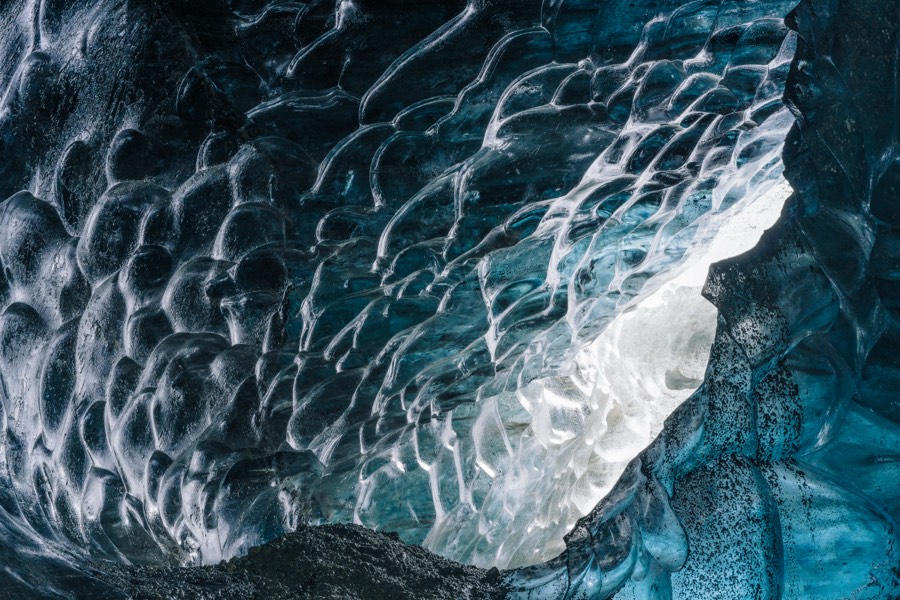
Natural ice caves
ISK 23,800–23,900 · Jökulsárlón
In season: Local Guide runs from October to March (ISK 23,900) and Glacier Adventure's Crystal Ice Cave from November to April (ISK 23,800, 09:00 and 13:00 from Hali).
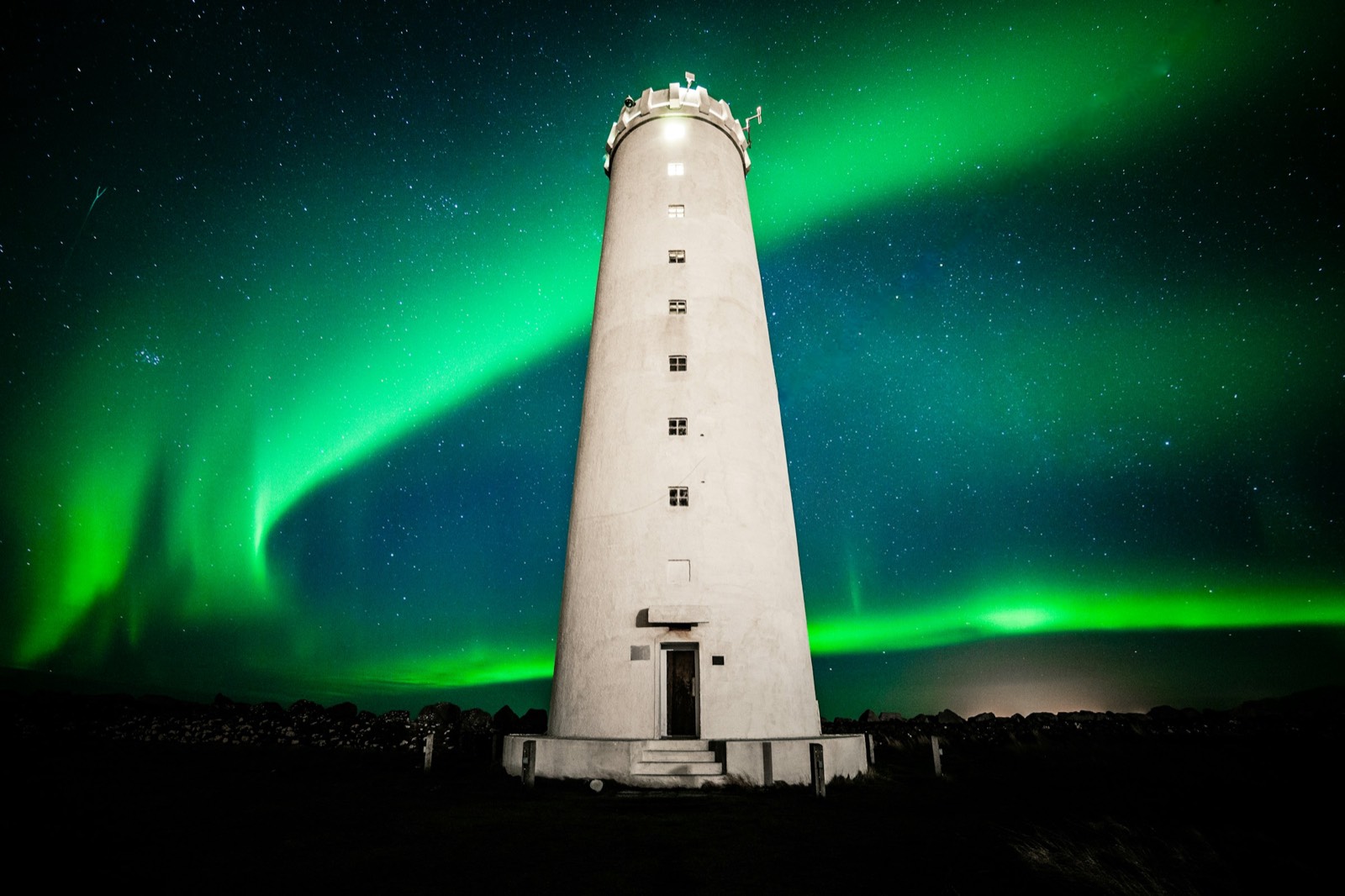
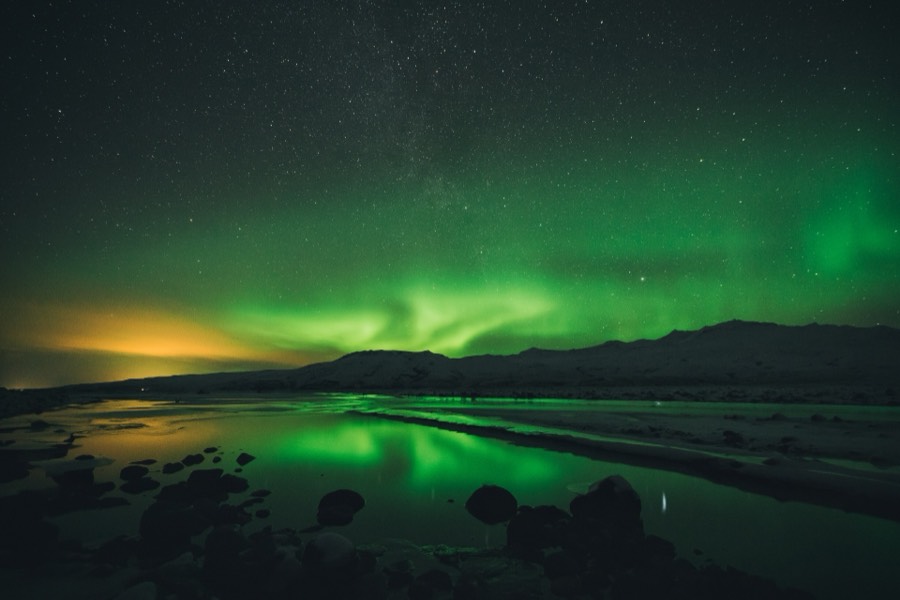
Grótta lighthouse, Seltjarnarnes, Reykjavík, Iceland. Photo: Kari Bjorn Photography, Unsplash License · 25-second exposure: brighter than the eye sees
December has the fewest active nights of the season (38% reached Kp 3 over 1996–2026), but the longest darkness, 12h54 on the 15th, so three nights in Reykjavík still gave a 55% chance of a proper display, about the same as any other month.
Key takeaways
Some links on this page go to booking partners. If you book through them we may earn a commission at no extra cost to you. It never changes what we recommend. How we make money
In short In mid-December Reykjavík has 12h54 of full darkness and 4h23 of daylight, an average temperature of 0.8°C and 71% of the sky covered on average, and 38% of nights reach Kp 3.
| What | Figure |
|---|---|
| Daylight (15 Dec) | 11:11 – 15:34 · 4h23 |
| Daylight (21 Dec, solstice) | 11:22 – 15:29 · 4h07 |
| Full darkness (15 Dec) | 18:56 – 07:50 · 12h54 |
| Nights reaching Kp 3 | 38% |
| Average temperature | 0.8°C |
| Rain and snow | 88.0 mm |
| Sky covered (average) | 71% |
| Sunshine | 15 hours |
| New moon | 9 Dec 2026, 00:52 |
| Full moon | 24 Dec 2026, 01:28 |
In short Three nights in Reykjavík give a 55% chance of a proper display and 29% of a strong show, and 8 nights give an 80% chance of a proper display.
Measured from Reykjavík and Keflavík airport weather reports, 2012–2026, matched to the Kp record: the chance of at least one good night if you stay in the Reykjavík area. A proper display is Kp 2 or more plus a clear hour; a strong show is Kp 3 or more plus a clear hour. Keflavík is the conservative figure. Both are slightly optimistic, because the reports miss thin high cloud (how we work it out):
Low activity costs December the big nights more than the ordinary ones: a proper display is as likely as in other months, a strong show less so. If a strong show is the point of the trip, September is the best bet, at 39% in three nights.
The darker half
The new moon on 9 December 2026 makes the first half of the month the darker half. The full moon falls on 24 December, Christmas Eve.
In short Besides the aurora, December has natural ice caves, whale watching from Reykjavík all year, Christmas in the city, and New Year's Eve bonfires.
ISK 23,800–23,900 · Jökulsárlón
In season: Local Guide runs from October to March (ISK 23,900) and Glacier Adventure's Crystal Ice Cave from November to April (ISK 23,800, 09:00 and 13:00 from Hali).
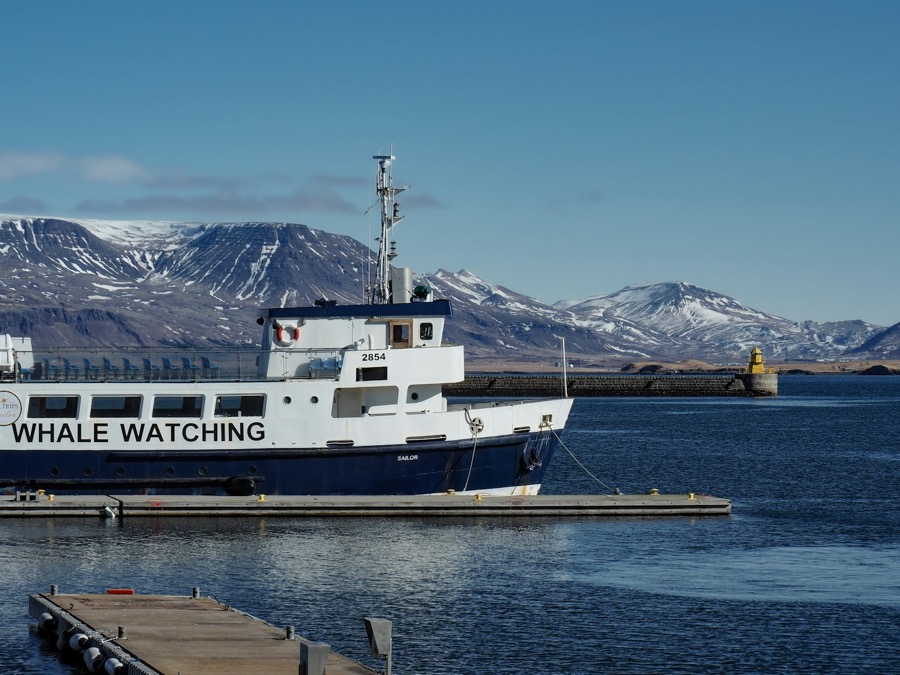
ISK 14,500 (Elding) · All year
Elding's classic tour runs every month. Húsavík's boats stop after 30 November, so in December Reykjavík is the easy option.
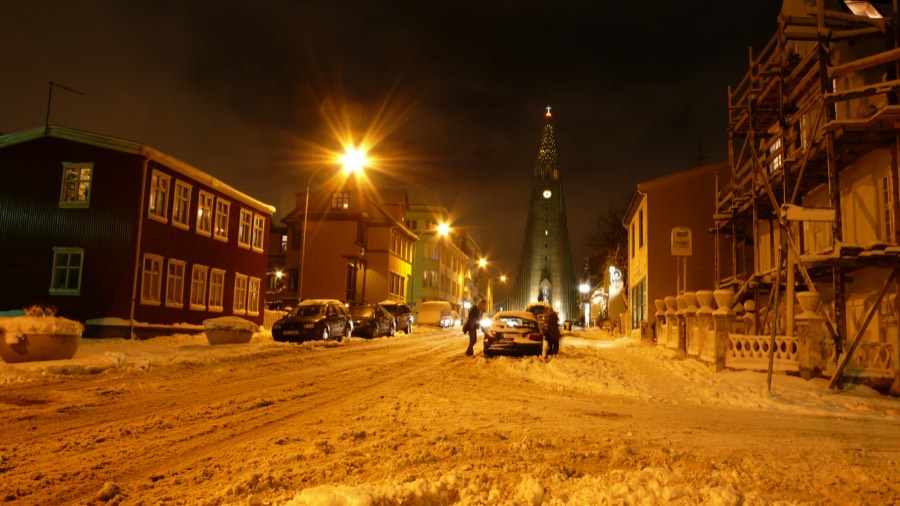
From 12 December · Yule Lads
The 13 Yule Lads arrive one a night from 12 December. The city also runs a Christmas Creatures hunt around the centre from early December.
From Reykjavík · 4x4 vehicle
With almost 13 hours of darkness, the guide has time to drive a long way to clearer sky.
Check dates on GetYourGuideYes, for ordinary displays. December has the least activity (38% of nights reached Kp 3 over 1996–2026) but the most darkness, so three nights in Reykjavík gave a 55% chance of a proper display, about the same as other months. Strong shows are less likely: 29% in three nights.
About 4h23 in Reykjavík on 15 December, from roughly 11:11 to 15:34, and 4h07 at the solstice on 21 December.
Yes, every day of the year, with shorter hours on Christmas Eve (08:00–16:00) and New Year's Eve (08:00–18:00).
By our calculation, 9 December 2026 at 00:52 UTC. The full moon is on 24 December.